
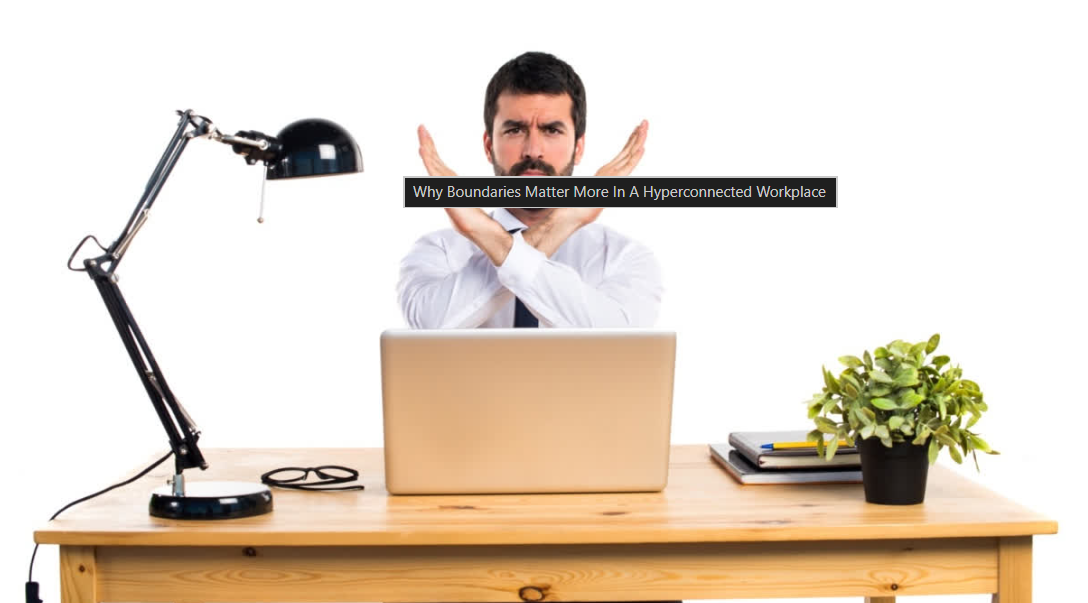
As you begin your work week in 2026, consider setting boundaries for your time and attention in the office.
Connectivity was sold to us as the ultimate freedom. The promise was simple. Technology would let us work from anywhere. Instead, for many of us, it has resulted in working from everywhere, all the time. The clear line that once separated “work time” from “living time” has vanished. The office is now in our pockets. It buzzes during dinner. It pings on weekends. This is a critical business risk that we can no longer ignore.
“Many leaders still mistake rapid responses for high performance. They value the employee who answers emails at midnight, one who is available 24×7,” says Sonica Aron, Founder & Managing Partner, Marching Sheep. She feels this is a serious issue that should not be taken lightly. “If not addressed now, it can have significant negative impact on the mental, emotional and physical health of our workforce, destroy relationships, careers and eventually the economy,” she says.
When a person is always “on,” their brain stays in a state of high alert. It never enters the rest mode needed for true recovery. The result is not better work. It is fatigue, listlessness, lack of motivation and eventually a strong urge to give up. Aron has noticed that over time, even the best talent burns out and leaves.
“We must also look at this through the lens of inclusion,” says Aron, “A culture without boundaries hurts specific groups more than others.” Consider caregivers, who are often women. They need predictable schedules to manage their dual roles and responsibilities. When work bleeds into the evening consistently, it creates chaos at home. It forces them to choose between their job and their family duties. This creates an uneven playing field. It silently pushes talented people out of the workforce because the environment is unsustainable.
The solution does not lie with the individual employee alone. We cannot simply tell people to “set better boundaries” if the company culture punishes them for it. This is a leadership issue. Managers set the tone. If a leader sends non-urgent messages on a Sunday, they signal that downtime is optional or they ask that in a polite manner, can we connect or they say “don’t reply now,” the pressure is felt. That cycle creates a toxic norm where rest or downtime feels like a weakness or a vulnerability.
To fix this, organizations need clear guardrails. We need to normalize the “right to disconnect.” aron believes leaders must respect personal time as sacred space. We must define what is truly “urgent”. Not every email requires an instant reply. True productivity comes from a rested mind, not a frantic one. We need to stop rewarding constant presence and start valuing actual impact. Protecting the “off” switch is the only way to keep the “on” switch working effectively for the long haul.