
What increasingly concerns me across workplaces is that many organisations still treat gender inclusion as an initiative to manage, rather than a business capability to strengthen.
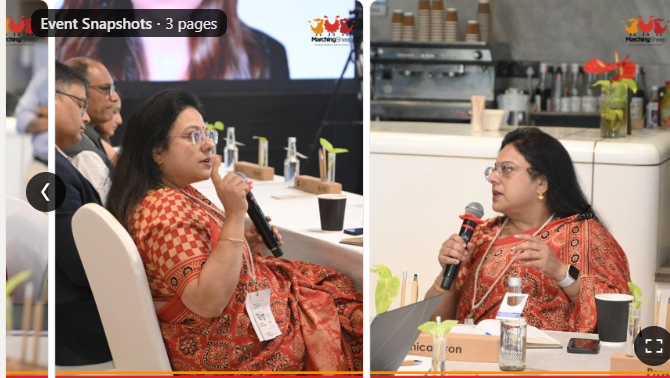
At the GCCI Gujarat Sustainability Summit – 2026, our conversations reinforced how closely inclusion is tied to organisational resilience, leadership quality, innovation, and long-term sustainability. Even though it is often discussed separately from business performance.
Over the years, I have seen that the biggest barriers to inclusion are often not explicit policies, but deeply embedded workplace norms — how leadership potential is evaluated, whose flexibility is accommodated without judgement, who gets informal access to decision-making spaces, and how performance is interpreted differently across genders. Organisations that fail to address these structural realities often experience the impact elsewhere: weaker leadership pipelines, higher attrition, reduced innovation, and slower organisational adaptability.
What I valued most about this roundtable was the honesty in the room. There was recognition that meaningful inclusion requires organisations to rethink systems, leadership behaviours, and accountability structures and not just improve representation numbers.
The future of inclusive workplaces will depend more on whether organisations are willing to redesign culture in ways that allow people to grow, lead and belong equitably.
Grateful to Sustainability Summit for creating space for nuanced and honest conversations around the future of work, leadership, and inclusion.
#Leadership #WorkplaceCulture #GenderInclusion #FutureOfWork #OrganisationalDevelopment