
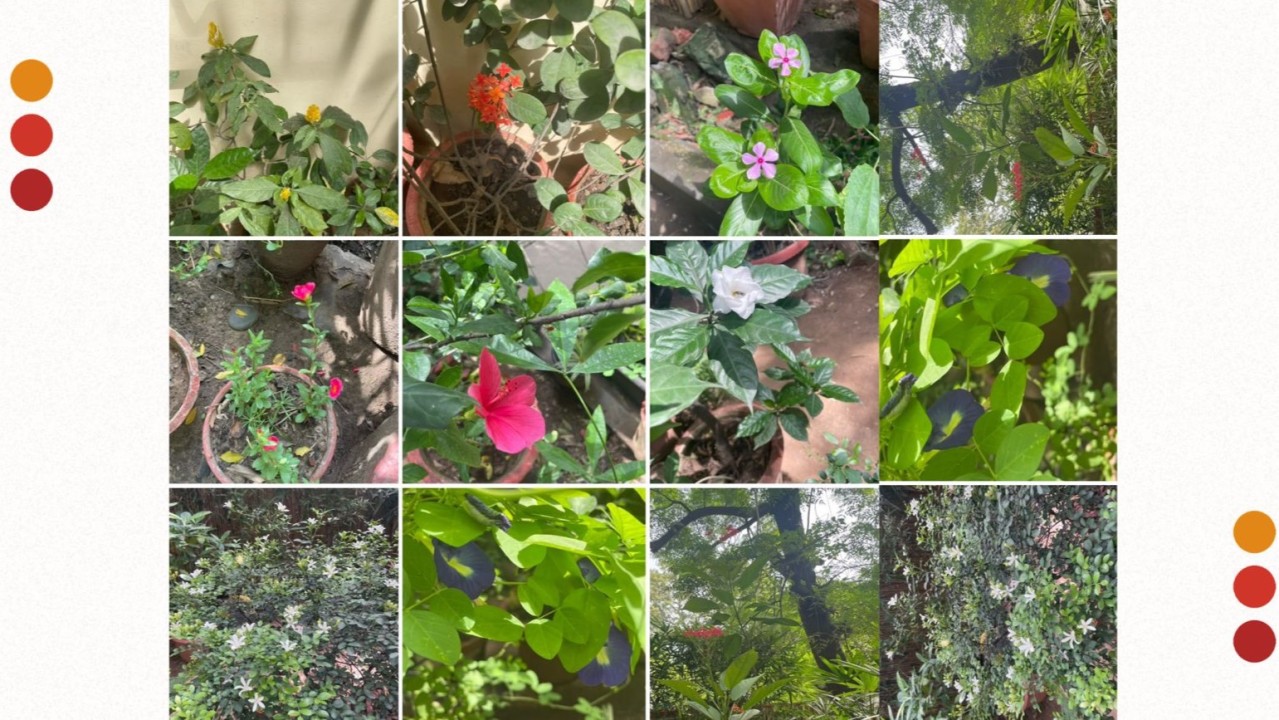
My garden is neither landscaped nor carefully curated.
It is a glorious medley of more than 2,000 plants and varieties—and I love every bit of its untamed character.
Because the garden receives very little direct sunlight, we have never had an abundance of flowers. For years, I tried to compensate for this by buying pots filled with brightly blooming plants from nurseries every month.
They brought instant colour.
But gradually, the flowers would wither. The plants would struggle. And I would replace them with another batch of nursery blooms.
Then one day, Mali Bhaiya, our gardener, firmly told me to stop buying plants.
“There is no space left,” he said.
My children agreed. They had already started calling the garden our “tropical forest.”
But what Mali Bhaiya said next stayed with me.
He explained that many plants arriving from nurseries are still young. They have often been nurtured under carefully controlled conditions so that they flower at the point of sale. Instead of continuously bringing in new plants, he suggested that we invest our time and care in the ones we already had.
“Let us nurture these,” he said. “It will take time, but they will bloom.”
He was right.
Over time, the plants became bigger, stronger and healthier. They began to flower—not as abundantly as they might have under clear sunlight, but they bloomed nevertheless.
And their blooms felt more precious because we had watched them grow into their strength.
It made me think about diversity and inclusion in organisations.
Diversity, like my garden, is not always neat or symmetrical. But it gives a place its character.
There are peace lilies that thrive indoors and roses that need the open air. Jasmine, mogra, hibiscus and raat ki rani come alive in the warmer months. Chrysanthemums, petunias, pansies and calendula bring colour to cooler days. Harsingar creates its own magic as the seasons begin to turn.
There are tiny bonsais and large, deeply rooted trees. There are many varieties of money plants, hardy cacti, delicate ferns and leafy plants that may never flower but quietly make the garden lush and alive.
Not everything blooms at the same time.
Not everything needs to.
Because of this diversity, there is always something growing, changing or flowering in my garden. It gives me a sense of peace throughout the year.
But diversity alone does not make the garden flourish.
Mali Bhaiya continuously shifts plants according to the season and the changing light. He follows a structure for adding nutrients. He knows that some plants need frequent watering, while too much water can destroy others. During the monsoon, certain pots are moved under a shed. In winter, the tulsi plant receives additional protection.
He does not treat every plant identically.
He gives each plant what it needs to thrive.
That is inclusion.
People at work are no different.
Some think aloud, while others need time to process before they speak. Some learn through discussion, others through observation, reading or experimentation. Some thrive in highly collaborative settings; others produce their best work when given autonomy and quiet space.
Some people communicate with confidence in large meetings. Others offer their most valuable insights in smaller conversations. Some seek visibility, while others need their managers to recognise contributions that are less publicly displayed.
People bloom in different seasons, under different conditions and in different ways.
An inclusive workplace does not demand that everyone adapt to one dominant way of learning, communicating, contributing or leading. It creates enough flexibility for different people to bring their strengths forward.
Equity lies in understanding that equal care does not always mean identical care.
Inclusion requires managers to do what Mali Bhaiya does so intuitively: observe, understand and respond. Move someone closer to an opportunity. Provide additional support during a difficult season. Offer the right nutrients through feedback, learning and sponsorship. Protect people from environments that may overwhelm them. And sometimes, simply give them the time and trust to take root.
Too often, organisations keep bringing in new talent in search of an immediate bloom, while overlooking the people already within the system.
Perhaps the question is not always, “Where can we find better talent?”
Perhaps it is also, “What conditions are preventing the talent we already have from flourishing?”
Diversity gives a workplace its character. Equity recognises that people need different things. Inclusion creates the conditions for them to grow.
And belonging is what happens when people know that they do not have to become a different kind of plant in order to have a place in the garden.