Code-

Five Priorities Every CHRO Should Be Focusing On Right Now

The world of work is not changing incrementally anymore. It is being fundamentally rewritten.

Over the last few years, organisations have dealt with pandemic aftershocks, economic uncertainty, geopolitical conflicts, inflationary pressures, AI disruption, changing workforce expectations, and rapidly evolving business models — all at the same time.

And yet, many organisations are still responding with yesterday’s structures, yesterday’s leadership models, and yesterday’s HR playbooks.  The reality is this:

The biggest risk facing organisations today is not AI. It is organisational inertia.

Across industries — banking, automotive, FMCG, pharma, infrastructure, IT, GCCs — I am seeing the same themes emerge repeatedly.

AI is reshaping jobs faster than organisations can redesign roles.

Middle management layers are slowing down decision-making instead of enabling agility.

Burnout is becoming institutionalised in “always-on” cultures.

Leaders are struggling to navigate ambiguity and sustained uncertainty.

Skills are becoming obsolete faster than companies can reskill their workforce.

And geopolitical instability is creating unpredictability in supply chains, hiring sentiment, investment priorities, and business continuity planning.

This is not a temporary disruption. This is the new operating environment.

The organisations that will succeed over the next five years are unlikely to simply be the largest or most profitable today. They will be the organisations that:

  • learn fastest
  • adapt fastest
  • reskill fastest
  • simplify fastest
  • combine technology and human capability most effectively

Which brings me to a critical question:

What should CHROs be doing in the next 3–6 months?

It is no longer about long drawn Annual Operating plans, 5 year plans, or elaborate transformation agendas.

It is about immediate, business-critical action rooted in people structure, capability and wellbeing.

Here are five priorities every CHRO should urgently focus on :

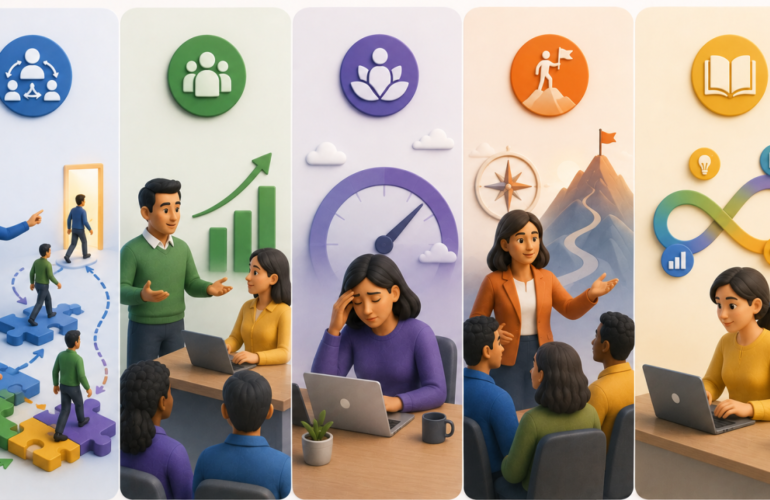
1. Figure out workforce redeployment in your context.

Many organisations are still thinking in terms of hiring versus layoffs. The smarter organisations are thinking about redeployment.

AI will eliminate tasks, no doubt about it. The question is:  Can companies identify higher order skills, capabilities and capacity quickly enough to redeploy talent into emerging roles?

CHROs need real-time visibility into:

  • Critical future roles and skills
  • Redundant tasks
  • Redeployment opportunities
  • Internal mobility pathways

The future belongs to organisations that can reskill at scale and do not get caught into the recruitment and layoff loop.

2. Rebuild middle management capability

One of the biggest hidden organisational risks today is the Management middle layer.

Many managers who were successful in stable environments but are now struggling with:

  • Ambiguity
  • Speed of change
  • cross-functional collaboration
  • AI-led ways of working
  • multi-generational workforce expectations

The expectation from a managerial role has shifted significantly.

Today we need managers who can:

  • Coach
  • Influence
  • Simplify
  • Empower
  • Problem solve

The middle layer can either become the greatest accelerator of transformation — or the biggest blocker.

3. Treat burnout as a business risk, not a wellness initiative

Emotional fatigue is everywhere, irrespective of industry, function or hierarchy.

Employees are dealing with:

  • Constant change
  • Economic anxiety
  • Digital & Content overload
  • Blurred work-life boundaries
  • Continuous performance pressure
  • Job insecurity

Many organisations are unknowingly creating cultures of silent exhaustion with burnout eroding away at productivity, innovation, customer experience, retention, leadership pipeline quality

This requires cultural and structural re-orientation with embedding of wellbeing across processes and policies.

CHROs must examine:

  • Unrealistic and unequitable workloads
  • Decision bottlenecks
  • Meeting overload
  • Lack of recovery periods
  • Toxic responsiveness culture

4. Build leadership capability for uncertainty

Most leadership frameworks were designed for predictable environments.

But today’s leaders must operate amidst:

  • AI disruption
  • Geopolitical volatility
  • Social polarisation
  • Changing workforce expectations
  • Economic unpredictability

Technical and functional competence alone is no longer enough.

Future-ready leaders need to flexible, emotionally intelligent and resilient, strong authentic communicators who truly inspire, and Manage change with empathy.

The real leadership differentiator today is the ability to create transparency amidst chaos, safety amidst ambiguity.

5. Create a culture of continuous learning — not episodic training

The half-life of skills is shrinking dramatically. A degree earned five years ago is no longer enough. Even technical skills now become outdated rapidly. Learning can no longer sit inside LMS platforms waiting for employees to “complete modules.”

Learning must become embedded into the rhythm of work itself.

The organisations that survive disruption will not necessarily be the ones with the best talent today. They will be the ones that can continuously transform their talent.

HR and L&D can no longer remain an execution-focused support function. They must act as business strategist, workforce architect, transformation catalyst, organisational conscience keeper and business performance drivers through people.

This evolution is here to stay and is demanding. Which leaders, and organisation ride the wave, and which ones drown will depend significantly on whether HR chooses to lead transformation through the above outlined focus areas.

Link – https://www.linkedin.com/pulse/five-priorities-every-chro-should-focusing-right-now-sonica-2hvcc/?trackingId=61TMArX6UjDkvtnyvSOFSQ%3D%3D

Read more

Belonging Is Built in Everyday Moments

Most Pride Month conversations begin with visibility.

Who is represented. Who is included. Who feels seen.

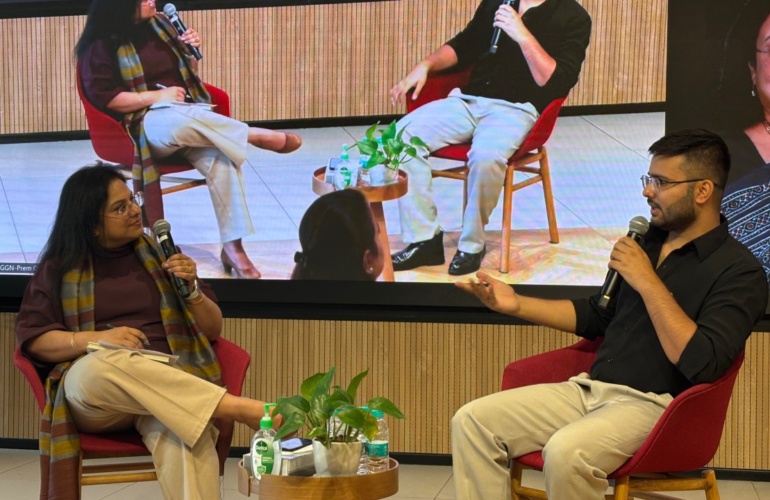
Yet as I reflected on a recent fireside chat hosted by NAB during Pride Month, alongside Yash Sharma , I found myself thinking about something deeper: belonging.

Throughout the conversation, we explored lived experiences, workplace realities, and the role organisations play in creating environments where people can show up as themselves. What stayed with me was not a particular statistic or framework. It was the reminder that inclusion is experienced in moments.

It is experienced when someone doesn’t have to edit their story before sharing it with colleagues. It is experienced when a manager responds with curiosity instead of assumptions. It is experienced when policies translate into everyday behaviours that make people feel respected, valued, and psychologically safe.

In my work with organisations across sectors, I often hear leaders speak about inclusion as a priority. The intention is genuine. The commitment is real. Yet intention alone does not create belonging.

People experience organisations through daily meetings, conversations, decisions, opportunities, and everyday interactions. They experience the culture around them. They feel whether they can speak openly. They think whether they have to conceal parts of themselves to feel accepted.

That is why Pride Month continues to matter.

It creates space for conversations that many people carry silently throughout their life. It invites organisations to listen. It encourages leaders to reflect on the experiences that exist within their teams. It reminds us that inclusion is not only about representation. It is about participation, voice, dignity, and trust.

One theme that surfaced repeatedly during our discussion was the importance of moving beyond symbolic gestures. Employees notice whether commitments are sustained. They notice whether support is visible throughout the year. They notice whether inclusion is embedded in both letter and spirit.

For organisations, this requires ongoing work. It requires leaders who are willing to listen even when the feedback feels uncomfortable. It requires systems that create access and opportunity. It requires cultures where people feel a genuine sense of belonging.

I left the conversation feeling hopeful.

Not because the work is complete. Not because every challenge has been solved.

I felt hopeful because these conversations are happening. People are sharing their stories. Leaders are engaging with difficult questions. Organisations are creating space to listen.

Pride Month gives us an opportunity to learn, evolve and celebrate as a society. It also gives us an opportunity to examine culture.

And perhaps that is the real invitation before us: not simply to acknowledge people for who they are, but to build workplaces where they can truly belong.

Listen with curiosity. Lead with empathy. Build with intention.

Link – https://www.linkedin.com/pulse/belonging-built-everyday-moments-sonica-aron-she-her-hers–y5a3c/?trackingId=lQ1cfG2xZKzV1xNkzF%2F06Q%3D%3D

Read more

The Manager Capability Gap Nobody Is Measuring

Manager training is not the problem. Am sure you have that covered. But have you measured Manager capability? And the impact on your organisation? Do you still observe these-

  • Managers still avoid difficult conversations
  • Feedback is diluted or delayed
  • Performance issues are tolerated
  • Teams feel disengaged, unseen, and unsafe
  • Managers turn to HR whenever there is a tough conversation with a team member

We cannot fix the above gaps with e-modules and one time sessions.

Managerial capability is built through:

  • Clarity of role and expectations- Shift to driving excellence through people
  • Ownership, accountability and responsibility- and no, they are not different words for the same thing
  • Ongoing and contextualised learning journey with transferable shills
  • Empowerment and Courage to take decisions
  • Business understanding with people empathy

Today, the manager role is the single biggest multiplier—or destroyer—of culture, performance, and retention.

And yet, we continue to treat it as a “training need,” not a business-critical capability.

If your managers are struggling, ask yourself:

Have we clearly defined what good management looks like? Are we measuring it?  Are we rewarding it—or tolerating mediocrity?

Because no amount of training can compensate for lack of intent, accountability, and ownership.

Link – https://www.linkedin.com/pulse/manager-capability-gap-nobody-measuring-sonica-aron-she-her-hers–zt0gc/?trackingId=nHoJeUmY9Mu6k2TARvhL7A%3D%3D

Read more

When Consultants Start Rating Clients (A Thought Experiment)

Every consultant knows the ritual.

You finish a leadership program, a DEI intervention, a strategy workshop, or a culture transformation assignment.

Soon after, a polite email goes out:

“Please share the participant feedback scores.”

Then comes the familiar evaluation grid:

• Was the facilitator engaging?  • Was the content relevant?  • Was the session interactive?  • Would you recommend this consultant to others?

Consultants across the world have accepted this feedback ritual with grace.

But every once in a while, a mischievous thought crosses the mind:

What if consultants also collected feedback on clients?

Imagine receiving a post-project survey that said:

“Dear Consultant, before we close the assignment, please rate your experience working with this client organization.”

The questions might look something like this.

1. Payment Timeliness

How efficiently did the client process payment?

  • ⭐⭐⭐⭐⭐ Payment arrived before the reminder email was even drafted. (Mythical creature.)
  • ⭐⭐⭐⭐ Paid within the contracted 30 days.
  • ⭐⭐⭐ Required two polite reminders and a gentle nudge to accounts.
  • ⭐⭐ Payment released after three months and twelve follow-ups.
  • ⭐ “Invoice approved but stuck in the system since last quarter.”

Most consultants will tell you this truth:

Delivering a three-day leadership transformation program is often easier than navigating a three-month payment cycle.

2. Procurement Negotiation Style

How did the procurement team approach commercial discussions?

  • Strategic partner mindset – Focused on outcomes and value.
  • Tough but fair – Healthy negotiation, mutual respect.
  • Vegetable market mode – “If you can do it for 5 lakh, why not 3?”
  • Forensic audit mode – Every cost line examined like a crime investigation.

Consultants understand budgets.

What they occasionally struggle with is explaining intellectual capital as if it were a bulk commodity.

“Can you reduce the price if we remove the thinking part?”

3. Proposal Ghosting Index

How responsive was the client after requesting a detailed proposal?

  • Highly engaged – Thoughtful conversations, clear decisions.
  • Polite delay – Occasional updates while internal alignment happens.
  • Meditative silence – Weeks of calm, reflective non-communication.
  • Complete disappearance – Last seen requesting a 15-page customized proposal with case studies.

And then one day, while scrolling LinkedIn, you see it:

The exact framework you proposed… now running internally at the client organization.

Pure coincidence, of course.

Consultants are generous people.

4. Respect for Expertise

How was the consultant positioned in the engagement?

  • Trusted advisor – Invited into real conversations.
  • Professional partner – Clear scope, mutual respect.
  • Slide beautification expert – “Can you just make this look nicer?”
  • Emergency firefighter – Called after six months of internal confusion.

Here’s the irony.

Organizations say they want strategic partners.

But sometimes treat them like first aid providers.

5. Post-Project Memory Retention

What happened after the work was done?

  • Outcomes acknowledged.
  • Impact celebrated.
  • Testimonials shared.

Or…

The consultant mysteriously disappears from organizational memory until the next crisis arrives.

Now, of course, this feedback form will never actually exist.

Consulting runs on relationships.  Diplomacy is part of the profession.

But the thought experiment raises an important question.

If organizations want true partnerships, shouldn’t accountability go both ways?

Timely payment isn’t generosity.  It’s honoring a contract.

Respectful negotiation isn’t courtesy.  It’s good business.

And intellectual work deserves the same ethical treatment as any other professional service.

To be fair, many clients are fantastic partners who value expertise and build long-term relationships.

But perhaps the consulting ecosystem needs a small cultural shift, where partnership is not just a word used in kick off meetings…but something that shows up in behavior.

Until then, consultants will continue doing what they do best:

Delivering powerful programs…and gently checking whether Accounts Payable has returned from their extended spiritual retreat.

Link – https://www.linkedin.com/pulse/when-consultants-start-rating-clients-thought-aron-she-her-hers–ha1vc/?trackingId=f2BkwPDhjd7WGJR%2F%2B3%2FoBw%3D%3D

Read more

Pride month is not a panel discussion

The last few days we have had multiple conversations on ‘Celebrating’ Pride month. Panel discussions and fireside chats are scheduled, Calendars blocked, rainbow filters are applied to branded assets, and guest speakers are invited to share their journey.

Inclusive emails are being drafted and CEOs and CHROs are launching them. There is an atmosphere of leaving a mark and creating visibility around the events. Once in a while, someone asks, we have done this all before without impact, tell us something unique, to create awareness as well as engagement.

Soon 30 days shall pass and it will be 1st July

And nothing would have changed.

Here is the uncomfortable truth most organisations are not willing to sit with: awareness is not inclusion. A talk about LGBTQIA+ experiences doesn’t make your team meetings safer, and a panel on Pride doesn’t change what happens when an employee makes a casual joke at someone’s expense and their manager laughs along. Policies exist in handbooks, but behaviour plays out in hallways, in team meetings, in the silence after a joke that nobody challenges.

The Gap Between the Policy and the Corridor

Most organisations I work with have the policies and infrastructure in place: equal opportunity statements, gender-neutral restrooms, inclusive medical insurance and DEI charters that explicitly include sexual orientation and gender identity. Some have gone further, with Employee or Business Resource groups, inclusive benefits, and mental health support.

And yet, when asked, how many people in the organisation feel safe to self-disclose and be their authentic selves, there is an awkward silence, followed by righteous justification- we don’t ask.

LGBTQIA+ employees in these same organisations tell a different story. They still self-censor. They decide, every single day, how much of themselves is safe to bring to work. They calculate, often unconsciously, whether to mention their partner at the team lunch, whether to correct a colleague who uses the wrong pronoun, whether to raise their hand in the town hall or stay quiet and stay safe. They experience the behaviour around them, and the policy that didn’t translate into safety.

Inclusion Is a Daily Referendum

What I want today’s leaders to genuinely grapple with is this: inclusion is not decided in the boardroom or the policy document or in that one event. It is decided in a hundred small moments every single day. The way a manager responds when someone comes out, the way a team reacts to an off-colour joke, the way a performance review is written when the reviewer is uncomfortable with who the person is, the way the term “culture fit” gets used to keep certain people out.

What makes these moments so hard to address is that they are often unintentional and unreported. They don’t surface in formal grievance processes, and precisely because they are small, they are normalised and allowed to accumulate until the LGBTQIA+ employee quietly decides that this organisation is not a place where they can thrive, and either leaves or dims their light to survive.

Awareness campaigns don’t address this. Behaviour change does.

What Do we Actually Need to Do

Shifting behaviour is harder than scheduling a panel, and it requires organisations to be honest about where those behaviors actually are.

Let’s start with managers. They are the single biggest contributor to whether inclusion is real or performative. An LGBTQIA+ inclusive policy means very little if the manager of that team creates an environment where people don’t feel safe, seen, heard or respected. And Manager capability-building is not a one-hour sensitivity training or an e-module, but a sustained journey with practical conversations about inclusive team culture and Psychological safety.

Next, Examine norms, not just policies. What language is tolerated in team chats? What happens when someone raises a concern? Is psychological safety strong enough that an employee can tell a senior colleague their comment landed badly and be heard rather than sidelined? These are not policy questions but culture questions, and culture is shaped most powerfully by leaders.

Third, Allyship is a verb. It requires intentional action. An ally is not someone who agrees that discrimination is wrong but someone who speaks up when discrimination is observed, experienced or perpetuated. Allyship needs to be nurtured and rewarded.

Lastly, lets listen. Not in a focus group that produces a report that sits in a folder, but in a way that leads to real change. Listen to the unexpressed hesitation, the quiet turning down of an invitation to an office party, the demotivated voice after an inappropriate joke is made. Hear what your organisation actually feels like from where your LGBTQIA+ employees sit, and then act on what we hear.

Pride Is a Beginning, Not a Destination

June is a good time to signal intent, but signals without follow-through create cynicism, and cynicism transforms into lack of belonging.

The organisations that get this right are not the ones with the most visible Pride campaigns. They are the ones where an LGBTQIA+ employee can mention their partner over lunch and nobody makes it awkward, where a manager notices a microaggression and addresses it in the moment, where inclusion is so embedded in everyday behaviour that it doesn’t need a month to announce itself.

That is the standard worth holding your organisation to.

Article by Sonica Aron, Founder & CEO, Marching Sheep.

Link – https://www.linkedin.com/pulse/pride-month-panel-discussion-sonica-aron-she-her-hers–25lec/?trackingId=24sRHbRCgrGuDlJb6GjGcw%3D%3D

Read more

Mental Health and Inclusion: One Size Does Not Fit All.

Mental health is often treated differently from physical health. For example, a person with a broken arm might wear their cast proudly, even inviting friends to sign it. But when someone struggles with mental health, they tend to hide it, fearing judgment, as if something is personally wrong with them. Yet both situations, broken bones or a chemical imbalance in the brain are medical conditions that require care and support.

With timely treatment, people generally recover, and their essential qualities, aspirations, and achievements remain intact. So why does mental health feel so different? It’s because each person’s mind is unique processing experiences and challenges in individual ways. This uniqueness crosses all lines: age, gender, background, sexuality, life stage, and more.

Recognising the Diversity in Mental Health Needs

Despite widespread conversation and new options for support, not all people’s needs are met equally. Mental health apps, meditation sessions, or an in-office counselor can help some, but not all. Consider these real-world situations:

  • Someone recovering from workplace sexual harassment.
  • A parent caring for a child with disability.
  • A person with a difficult home environment.
  • An employee experiencing workplace toxicity.
  • Someone accused in a POSH (Prevention of Sexual Harassment) case.
  • A son or daughter worried about an aging parent left alone.

Each of these people faces distinct pressures and emotions, frustration, helplessness, anger, guilt, overwhelm. And there are many more nuanced cases: young professionals negotiating early-career anxiety, new parents juggling roles, caregivers feeling stretched thin, older workers worrying about being valued, employees hiding invisible disabilities or aspects of their identity, and those burdened by ongoing micro-stress at work. These are not abstract scenarios; they’re the real lives of colleagues around us.

Beyond “One Size Fits All” Solutions

Many organisational mental health initiatives budgeted wellness programs, insurance plans, or standard-issue health checks work on a uniform model. These help but aren’t enough to account for the rich diversity within any organisation. A more effective, inclusive approach offers choice and flexibility:

  • Population-level supports: General resources like manager training, stigma-reduction campaigns, and health events open to all.
  • Targeted supports: Specialised resources for maternity or perinatal needs, caregiving coaching, accommodations for neurodiversity, or accessible counseling for LGBTQ+ people.
  • Flexible pathways: Combining self-guided digital programs for everyday concerns, specialist referrals for complex needs, and a panel of counselors who understand diverse backgrounds, with options for in-person consultations.

Organisations should ask: are programs a true reflection of people’s diverse realities, or just a checkbox exercise? The biggest opportunity lies in letting people choose from a “menu” of options rather than sticking all into a single box. This not only increases engagement, but also raises morale, improves productivity, and creates healthier workplaces.

The Power of Clear Communication

A key barrier is confusion: sometimes policies are generous but hard to navigate. Clear, simple information about what’s covered, how to access support, and who to contact can make or break a program’s effectiveness. It helps when resources come with:

  • Easy guides mapping problems to solutions: E.g., what to do if dealing with caregiving stress, where to turn for LGBTQ-affirming support, or how to get neurodiversity accommodations.
  • Plain language: Avoiding jargon and legalese so information is accessible.
  • Transparency about confidentiality: Explaining how personal information is handled puts people at ease and encourages them to seek help.

When processes are transparent and user-friendly, people access support sooner and outcomes improve.

Efficient, Flexible Customisation

Some worry that more tailored offerings cost too much. But smart design can increase meaningful choice without driving up budgets:

  • Swap-and-choose models: Employees can pick the mix (therapy, peer-support, coaching) that’s right for them.
  • Tiered offerings: Core digital or foundational programs for all, with add-ons for more specialised needs.
  • Specialist partnerships: Collaborate with providers who understand minority stress, caregiver challenges, or other specific issues.

The goal is not unlimited options, but better matches leading to faster recoveries, fewer relapses, and lower long-term costs.

Practical Principles for Inclusive Support

  • Center on lived experiences: Co-create services with people across different life stages and identities.
  • Offer clear choices: Menu of options with details on what’s covered and realistic timelines.
  • Accessible formats: Virtual, in-person, and asynchronous options, plus cultural competence and provider diversity.
  • Upskill managers: Equip leaders to spot signs of distress and offer empathetic guidance.
  • Respect privacy: Health information should be separate from performance data; privacy policies must be transparent.
  • Measure outcomes that matter: Track both usage and improvement including feedback from underrepresented groups.

Quick, small steps can be powerful: run listening sessions to gather diverse perspectives, map existing supports against real-life needs, create simple one-page guides, run pilot programs, and focus budget discussions on “impact per rupee”.

For example: In one case, a swap-and-choose pilot (allowing people to select coaching, therapy, or peer-support) increased usage and improved functional outcomes, with lower recurring leave for mental health.

Building Safe, Human Workplaces

Ultimately, mental health at work isn’t only about insurance or therapy, it’s also about culture. Supportive, stigma-free environments where people can speak honestly, leaders listen respectfully, and teams offer empathy make the real difference. Open conversations, clear communication, and real choices signal that everyone matters.

Moving Forward

There’s no one blueprint, but progress starts with these basics: listen before acting, communicate clearly, offer real flexibility, and build genuine safety for all. Mental health is at the heart of inclusion when we acknowledge diverse realities and empower people to seek care in their own way, we build organisations that are not just productive, but kind. Because when people feel they matter at work, they don’t just work better, they live better.


Link –https://www.linkedin.com/pulse/mental-health-inclusion-one-size-does-fit-all-aron-she-her-hers–zlr7c/?trackingId=MIxnRe6bQruhpeer2OopBQ%3D%3D

Read more

Life Happens. How We Show Up is Everything.

They said, “We are doing them a favour by hiring them, why do we have to pay?”

Our PwD recruitment team repeated the words of a talent acquisition lead of a leading IT company. I was taken aback, slightly irritated, not very surprised.

The conversation around hiring Persons with Disabilities (PwD) has, for too long, been viewed as charity, CSR, good to do, something driven primarily by NGOs and foundations, and adopted by organisations as a well-intentioned reputation building activity. The notion that companies are “doing a favour” by considering PwD candidates is not just patronising; it is a significant barrier to building genuinely inclusive culture and diverse and high-performing teams.

Placing talented PwD candidates should not be an uphill task, but it often is because many organisations fail to recognise that this is a strategic business imperative, not a corporate social responsibility (CSR) checkbox. The difficulty arises from outdated stereotypes, assumptions about productivity, capability, education and ambition of Persons with disability. inefficient processes, and a lack of empowerment within the HR function itself.

1. The End of the “Favour” Narrative: A Mutually Beneficial Partnership

The first mindset that needs dismantling is the charity model. When a company hires a PwD candidate, it is not a one-sided act of benevolence. The employer gains access to a vast, often overlooked pool of talent that brings unique problem-solving skills, resilience, and diverse perspectives crucial for innovation. The candidate, in turn, gains an opportunity with an organisation that is, or is committed to becoming, truly inclusive. This is a symbiotic relationship. An organisation intentionally building ramps, both physical and procedural, signals a modern, adaptable, and empathetic culture attractive to ‘all’ top talent, not just PwD. The uphill battle begins when companies approach this as a concession rather than a competitive advantage in the war for talent.

2. Meritocracy and Compensation: Disability ≠ Lower Productivity

A pervasive and damaging myth is that disability inherently correlates with lower productivity or an inability to meet Key Result Areas (KRAs). This unconscious (and sometimes conscious) bias is a major reason for the reluctance in hiring and for offering lower Compensation and Total Cost (CTC) packages. This assumption is not only incorrect but ethically wrong. A candidate’s disability may require reasonable accommodations, a screen reader for a visually impaired employee, a flexible schedule for someone with a chronic condition but these are tools, not indicators of diminished capability and productivity. The core skills, qualifications, and experience are what determine the role and its corresponding salary. Offering a lower CTC to a PwD candidate for the same role is discriminatory and instantly devalues the talent the company claims to seek. True inclusion means evaluating candidates on their merit and compensating them fairly for the value they bring.

3. The Pace of Modern Hiring: Respecting the Candidate’s Time

In today’s fast-paced job market, top candidates, regardless of disability, are not going to be waiting around for weeks. A protracted hiring process, where candidates are left hanging for weeks or months between interview rounds, is a recipe for losing the best people. This is especially critical for PwD candidates who may have faced repeated rejection and are highly attuned to signals of a company’s genuine commitment. An inefficient process signals disorganisation, indecision, and a lack of respect for the candidate’s time and other opportunities. If an organisation is serious about inclusion, it must streamline its hiring timeline. Speedy, transparent communication is not a special accommodation; it is a hallmark of a professional and respectful talent acquisition strategy.

4. The Criticality of Constructive Feedback

The silence that often follows a rejection is deafening and damaging. For PwD candidates, who may be navigating a system fraught with unspoken biases, the absence of constructive feedback widens an already significant trust deficit. A generic “we decided to move forward with another candidate” offers no path for growth and reinforces feelings of exclusion. Providing specific, actionable feedback focused on skills or experience gaps, not the disability is essential. It demonstrates respect for the candidate’s effort and investment in the process. This practice builds a positive employer brand, even among those not selected, and fosters a reputation as a company that values growth and transparency.

5. Empowering HR as a Strategic Partner, Not a Processor

Finally, the uphill task persists because Talent Acquisition (TA) and HR teams are often not empowered as strategic decision-makers. They are frequently seen as administrators who simply execute the wishes of hiring managers. For inclusion to work, this must change. HR must have the mandate and the skills to sensitise hiring managers. This includes training on inclusive interviewing techniques, recognising and mitigating unconscious bias, and making swift, collaborative decisions. HR should be the custodian of the inclusive hiring strategy, equipped to challenge hiring managers when biases emerge and to advocate for candidates based on merit and potential, not just familiar profiles.

The challenge of placing PwD candidates is not inherent to the candidates themselves, but to the systems and mindsets of the employers. The path forward requires a fundamental shift: from charity to strategy, from assumption to evidence-based evaluation, from sluggish bureaucracy to agile respect, from opaque silence to constructive dialogue, and from a compliant HR function to an empowered, strategic partner. When organisations make this shift, they will find that what seemed like an uphill task was merely the path to building a stronger, more innovative, and truly inclusive workforce.

Link – https://www.linkedin.com/pulse/beyond-charity-why-true-disability-inclusion-requires-sonica-hu8qc

Read more

Life Happens. How We Show Up is Everything.

All of us have been through a crazy last few years, the pandemic, demonetization, multiple wars and other uncertainties… all impacting our lives and teaching us lessons. It was tough but it passed …

But, life’s most profound lessons often come from the most unexpected places. Recently, my family and I were hit with a loss that was immensely heartbreaking. Our 5-year-old Labrador, Daenerys, passed away. She wasn’t ill, weak, or old. A sudden, vicious illness took her from perfect health to gone in just 48 hours. The shock was paralyzing. It’s been three weeks, and our family is still grieving.

Three days after she passed, I was standing in front of an audience, about to start a session. On autopilot, I began my standard introduction: “I am Sonica Aron, I have 2 kids, 1 dog, 2 cats, and 1 husband.” But this time, after I said my name, my throat constricted. The next words stuck, a painful lump of reality. I could no longer say “I have 1 dog.” The grief was a physical force.

At that moment, I had a choice: to freeze, to break down, or to push on. I walked over to a bottle of water, took a deliberate sip, and made a silent promise to myself for a quiet moment of pampering later. I finished the introduction, and the session, drawing strength from a simple decision: I will not let the fall define my stance.

That evening, I crystallized what these experiences have been trying to teach me:

  1. There is no running away or escaping from difficult emotions. It is best to acknowledge, feel and face them.
  2. One day at a time. Sometimes, one hour at a time is all you can manage. And that’s enough.
  3. Do your best each day, and then try a little more. Your best looks different on different days. Honour that.
  4. Acknowledge every emotion. This is the most crucial step. It’s where you listen to yourself and offer yourself the kindness you would extend to a dear friend.
  5. Speak to people who truly matter. In the three weeks after Daenerys passed, I called old friends from college, a confidante from my early career, a team member on sabbatical. These weren’t networking calls. They were calls for human connection, for the balm of a familiar voice that makes you smile through tears.
  6. And Lastly Time is the best healer. It doesn’t erase, but it softens the edges of the pain. This too shall pass.

Life will continue to throw challenges our way. That is its nature. But we have absolute control over our response. We can choose to show up, even with a broken heart. We can choose to find one thing to be grateful for each day. We can choose to be kind to ourselves.

So, to all my friends and connections out there struggling with a layoff, a toxic work environment, financial trouble, or a personal loss: please hang in there. Be gentle with yourself. Acknowledge the fall. But then, take that one small step. Just show up. This too shall pass!

Link – https://www.linkedin.com/pulse/life-happens-how-we-show-up-everything-sonica-aron-she-her-hers–cfwnc/?trackingId=5ifmFn%2ByTICVoBW7Mbq1zw%3D%3D

Read more

Don’t Get Comfortable in Your Cocoon: The Art of Intentional Evolution

We all spin a cocoon around ourselves. It’s woven from routine, comfort, and the familiar. It feels safe. But a cocoon isn’t meant to be a permanent residence; it’s a transitional space for transformation. The choice is simple: break out on your own terms, or wait for life to forcibly tear the walls down. The latter is always more painful. Here’s how to choose the former.

1. Evolve or Become Irrelevant

The world does not pause for anyone. Clinging to outdated methods, ideas, or pride is a fast track to irrelevance. Embrace change not as a threat, but as the very currency of growth. This requires a radical dose of humility. It’s admitting, “I was wrong.” It’s seeking to learn from someone younger, less experienced, but more knowledgeable in a new domain.

Being wrong is a data point. Being rigid is a death sentence. The ability to pivot, adapt, and shed old skin is the superpower of our time. Don’t let your identity get so fused with your current way of being that you can’t imagine a new one. Your relevance depends on your flexibility.

2. The Lifeline You’re Neglecting: Your Friends

I recently watched a heartbreaking episode of  “The Morning Show” where a character, Hannah, reached out to a friend in crisis, only to be met with fury. Why? She had missed the friend’s baby shower and farewell. She’d been “too busy.” The friend’s pain was palpable: “You don’t get to just show up when you need something.”

This hit home. Two weeks ago, I lost my 5-year-old dog. In the crushing loneliness of grief, I realized with stark clarity how I had let so many profound friendships fade. The people who truly knew and loved me were not present because I had been absent.

This is the wake-up call: As we get older, we don’t need more acquaintances; we need our friends. The ones who knew us before our job title defined us. Nurturing these bonds cannot be a passive act. It requires an active, intentional effort to reach out not because you need a favor, but because you value their presence in your life. Invest in your friendship bank, because one day, you will need to make a withdrawal on love and support.

3. The Dangerous Illusion of “I’m Too Busy”

We hide behind the shield of busyness. We leave messages on “read,” ignore emails, and decline invites, perpetuating the illusion that being unavailable signifies importance. This is a trap. The “I’m too senior to be available” mindset is a one-way ticket to isolation.

A single line of acknowledgement “Got this, swamped but will reply properly later!” takes less than a minute. It provides closure, shows respect, and maintains a bridge. People remember how you made them feel, and consistently making them feel ignored is a surefire way to find no one there when your cocoon finally cracks.

Break out before you’re broken out of. Choose evolution over rigidity. Choose connection over convenience. Choose humility over hubris. Tear down the walls yourself, and step into a world that is waiting for the evolved, connected, and present  #ButterflyYouAreMeantToBe. Your future self will thank you for it.

Link – https://www.linkedin.com/pulse/dont-get-comfortable-your-cocoon-art-intentional-aron-she-her-hers–j1ljc/?trackingId=5TIKPDZNTMyAwuvoHjltaA%3D%3D

Read more

Lower Participation of women at the workplace: The Broken Rung, the Maternity Cliff Edge and What you must know to avoid them!

My son was born in 2008. Maternity leave in India then was 12 weeks, 84 days, just short of 3 months. As my maternity leave was about to end, I called my manager.

“What do you want?” he asked. My request was simple: continue my pre-maternity role with a few accommodations– first half from office, second half from home. In an era where broadband was just starting, most people worked on desktops, there was no concept of remote work/ work from home; zoom/MS teams did not exist, this was a tall ask.

To my immense relief, My manager got the necessary approvals and made it happen. His ask- don’t let anything fall between the cracks and you are fully accountable for your deliverables. A fair ask.

For three months, it worked. I delivered results, navigated motherhood, and believed balance was possible. Then, leadership changed. The new leader saw not a productive employee adapting brilliantly, but “favouritism.” My consistent performance over 4 years seemed irrelevant.  All that was visible was my ‘motherhood status’ and the ‘accommodations’ which were taken away.

It made my continuing to work in the same role difficult. I asked for a role and location change, where I could leave my child in family care.  It was a compromise. I did not like the new role, I tried to adjust, but could not and I Quit the organisation I loved.

My story isn’t unique; it’s just an anecdote of how sometimes managers can haemorrhage female talent at the critical mid-career juncture, a phenomenon starkly quantified as the “Hourglass Effect.”


Recent data from the Marching Sheep Inclusion Index 2025 paints a painful picture: while women constitute approximately 22% of junior management in India, they vanish from the pipeline upwards. A staggering 63% of Indian organisations have zero women in Key Managerial Positions (KMPs). Representation resurfaces at the board level, often driven by legal mandates (like the Companies Act requirement for one woman director). But this top-heavy presence is a façade, masking the catastrophic mid-level exodus.

Going deeper into the reasons

The “Primary Caregiver” Presumption: I still recall one statement that my mother-in-law made within the first week of my son being born. I had just nursed him and was longing for a nap. So I told my MIL that I will nap for 30 min, and if she could handle him. She gently told me- He is not just your child. He is everyone’s child. There is only one thing that we cannot do, that is feed him, which you have done. Now he is good for the next 2-3 hours. You go and sleep. Rest everything else, from burping, to changing, to putting to bed, any and every one of us can do.

Those few but meaningful words changed the course of my life. I was a mother, but also a wife, daughter, sister, professional, friend and all these identities are important to me, and if I want to live my life to the fullest, each of these identities need to thrive. And for that, I need to partner with others in my life to shoulder the responsibilities.

Unfortunately, despite strides in education and early careers, deep-rooted gender norms still box women as the default caregivers across many families. This translates into an invisible tax. When familial responsibilities – childcare, eldercare – intensify, often coinciding with the mid-management push, women face an impossible choice. The Economic Survey highlights a devastating statistic: 60% of Indian women aged 15-59 are engaged solely in “domestic chores,” excluded from the paid workforce. Organisations, reflecting societal biases, frequently lack robust support systems (beyond minimal legal maternity leave), assuming women will naturally scale back or leave. Managers, like my second leader, often perceive flexible arrangements not as productivity tools but as undeserved concessions and productivity drain.

Leadership = Masculine Traits: The Perception Trap: Women aspiring to leadership confront a persistent bias associating effective leadership with traditionally “masculine” traits – assertiveness, decisiveness, relentless availability. Women demonstrating these same traits risk being labelled “bossy” or “aggressive,” while those exhibiting collaborative or nurturing styles are often perceived as soft or lacking ‘executive presence’. This creates a double-bind.

Furthermore, the perception that operational roles (often a leadership pathway), especially in manufacturing or heavy industry, are “male domains” (“requires heavy lifting,” “remote locations unsafe”) further restricts opportunities, regardless of actual capability or interest . The “boys’ club” network effect persists, often denying women access to crucial projects and sponsorships essential for advancement.

Growth Demands Gendered Hoops: Relocation, Travel, Endless Hours: Career advancement, particularly into leadership, is frequently gate-kept by requirements disproportionately challenging for women bearing the primary cargiving burden.

I remember, in 2010, I was at a juncture where growth within the same organisation could be achieved only if I took an international role. While it would have been a dream come true for many, I had several familial ties. My father was terminally ill, I had a two year old child and I needed family support, my Mother in law is a single parent, so I chose not to leave the country.

Even now choices around relocations, extensive travel, and an expectation of constant late-night/ weekend availability become insurmountable barriers. Growth becomes tied to these specific, inflexible behaviours rather than pure competence, performance, or results. This system inherently disadvantages everyone, men and women alike, but statistically impacts women more, who cannot simply offload domestic responsibilities. The data shows men at entry level are 2.4 times more likely to be promoted to manager than women, significantly due to these invisible barriers and biases.

This is where structured interventions like She Returns and She Marches becomes critical. They move beyond statistics and models to providing the systemic scaffolding women and organisations need:

She Returns: Systemically Navigating the Maternity Transition: This program tackles the “maternity cliff” head-on. It’s not just about policy documents but about operationalising support. From pre-maternity to post maternity, mapping every touch point, enabling every interaction and building procedural and behavioural capability that ensures wellbeing, retention, growth and productivity of the female employee.

She Marches: Unleashing Potential at Every Level: A journey designed with the help of occupational psychologists and enables participating women talent to take charge of their success goals with confidence and chase them with focus.

The Marching Sheep Inclusion Index data confirms companies with higher gender diversity deliver 50% higher Profit After Tax (PAT). The business case is irrefutable. My story in 2008, and the ongoing exodus of countless talented women, represents a colossal waste of potential – for the women and for Incorporates.

Enough said and written, let’s get to work.


Link – https://www.linkedin.com/pulse/lower-participation-women-workplace-broken-rung-cliff-sonica-1uejc/?trackingId=5TIKPDZNTMyAwuvoHjltaA%3D%3D

Read more

The 5:1 Rule for Inclusion: Your Daily Ratio for driving Belonging

Mornings at my house: two teens, one grumbling about exams, the other sulking about a stolen burger. My instinct? A lecture. Instead, I channel Dr. John Gottman. His decades of research revealed a universal truth: thriving relationships need five positive interactions for every negative one. Fall below 5:1? Disaster looms. So, I offer a muffin, ask about the chemistry test, Promise to be there for the next football match, plan a movie night and a girls day out. Five positives deployed. Crisis averted.

At work, 5:1 can be the magic answer to the dreaded question: “We know inclusion matters, but what do we actually do?”

Every microaggression a dismissed idea, a biased assumption, an exclusionary comment is a Gottman -1. It erodes trust and belonging, like slamming a door at home. Damage control isn’t enough. We need an inclusion surplus: five deliberate +1s for every -1. This shifts us from reactive defence to proactive culture-building. Address the negative? Absolutely. But the real healing comes from flooding the zone with positives.

How 5:1 Works at Work

Scenario 1: The Hiring Head-Scratcher (-1) “We don’t get qualified female candidates!” (Translation: Biases are showing.) The +5 Reset:

  1. Revise Job Descriptions: Ditch “ninja/rockstar.” Use neutral language, highlight flexibility.
  2. Diverse Interview Panels: Mandate varied perspectives. Train on structured interviews.
  3. Build Pipelines: Partner with organisations and institutions supporting underrepresented talent.
  4. Showcase Role Models: Feature diverse employees (with consent!) in recruitment.
  5. Track Data: Audit sourcing and drop-off points. Fix leaks systematically.

Scenario 2: The Meeting Muddle (-1) Tanya’s idea is ignored; Pratik repackages it and gets an applause. (Soul-crushing “Hepeat.”) The +5 Reset:

  1. Set Inclusive Norms: Rotate speaking order. Ban interruptions. Mandate equal airtime.
  2. Amplify Marginalized Voices: “Great point, Pratik, building on Tanya’s idea about X. Tanya, can you expand?”
  3. Give Credit where its due: “Thanks, Alok. As Tanya originally said…”
  4. Attribute Ideas in Notes: Circulate clear summaries fast. Follow up with quiet contributors.
  5. Solicit Feedback: End with: “How inclusive was this? How can we improve?”

Scenario 3: The Promotion Puzzle (-1) A high performing high potential employee (e.g., a single mom) is passed over for vague “culture fit” or “executive presence” reasons; a less experienced man advances. The +5 Pathway:

  1. Demystify Criteria: Publish clear, objective promotion requirements (skills, competencies, results).
  2. Diverse Calibration Panels: Audit decisions for bias. Challenge “potential” excuses.
  3. Assign High-Visibility Work: Proactively offer stretch projects to underrepresented talent.
  4. Formal Sponsorship: Leaders must champion diverse talent for roles, not just mentor.
  5. Actionable Feedback: Give specific, development-focused guidance long before promotion cycles.

Making the 5:1 Magic Happen

  • See the -1s: Train teams to recognize microaggressions and exclusion. Awareness is step one.
  • Fix the Leak: Address the negatives directly yet kindly. The +5 doesn’t replace accountability.
  • Be Consistent: Intentional, daily +1s rebuild trust. One-off efforts are glitter on mud.
  • Measure Belonging: Track survey scores, promotion rates, retention. Data reveals the truth.
  • Everyone’s Job: Especially majority allies – contribute your +5s daily.
  • Progress > Perfection: Awkward tries are okay. Learn, adapt, and keep counting.

The Inclusion Surplus

Gottman taught us relationships thrive on positive momentum. Workplaces are no different. The 5:1 ratio moves inclusion from aspiration to daily action. By relentlessly generating five positives for every negative, we build reservoirs of trust and belonging. We create spaces where diverse talent isn’t just hired, but nurtured, heard, and advanced.

Stop plugging leaks. Start building your surplus. Your next +1 starts now.

Link – https://www.linkedin.com/pulse/51-rule-inclusion-your-daily-ratio-driving-belonging-sonica-agcbc/?trackingId=5TIKPDZNTMyAwuvoHjltaA%3D%3D

Read more