Code-

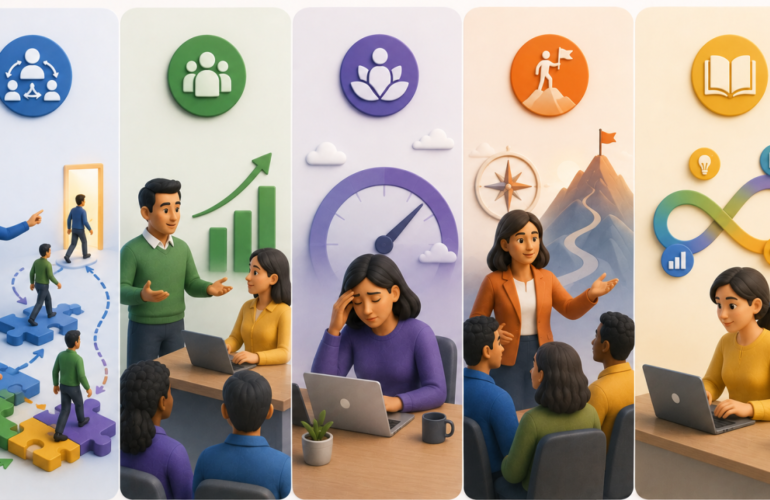
The Biggest Leadership Gap Today Is Not Strategy but Manager Readiness.

One pattern has become difficult for me to ignore.

Organisations spend months refining strategy, but comparatively little time preparing the managers expected to bring that strategy to life. 
Perhaps that’s why so many well-designed strategies struggle once they reach the real world.

In my experience, execution is rarely where the strategy breaks down. It’s where managers are left to interpret, communicate, and lead change without enough preparation.

A few reflections on why I believe manager readiness may be one of the most overlooked leadership priorities today.

I’m curious to hear your perspective. Have we underestimated the role managers play in turning strategy into reality?

#firsttimemanagers #managers #managerialcapabilities #workforcedevelopment #thoughtleadership


Link – https://www.linkedin.com/posts/sonica-aron-she-her-hers-17499a1_firsttimemanagers-managers-managerialcapabilities-activity-7488435747801358336-1y5c?utm_source=share&utm_medium=member_desktop&rcm=ACoAAABS2WgB8dIo4r2vjNbQcDRxB1z3vkSekis

Read more

We’re Still Teaching Leadership Like It’s 2006. Today’s Managers Need a Different Playbook.

Lets pause and reflect.

If someone became a manager for the first time today, would we train them differently from how we trained managers twenty years ago? Purely on instinct, the answer should be yes.

But the reality is very different.

The examples may have changed. The slides look more modern. We have added conversations about wellbeing, hybrid work, and AI.

Yet beneath the surface, much of the thinking about leadership still belongs to a very different workplace. The workplace where managers usually had more information than their teams, decisions moved slowly through hierarchies, careers followed predictable paths, and stability was often the norm.

But today’s workplace looks very different.

Knowledge no longer sits neatly with the manager. A graduate can use AI to explore a problem in minutes. Teams are increasingly made up of specialists whose technical expertise exceeds that of the person leading them. Employees expect feedback in real time rather than once a year. Careers are no longer linear, and uncertainty has become a permanent feature of work rather than an occasional disruption.

Yet many organisations are still preparing managers for a world that no longer exists. Add to it the nuance of stereotyping the younger generation as impatient, not committed or loyal.

We no longer need the manager to have all the answers but should know how to get their team to have all the answers.

We do not need managers to command and control, but to enable and empower.

We need managers who speak less and listen more.

We need managers who can delegate with trust and not micromanage.

We need managers who just do not fill performance appraisals  but spend  time helping team members navigate ambiguity, rapid change, conflicting priorities, and constant reinvention.

Perhaps the biggest shift is this.

For years, managers created value by having answers and doing it all.

Today, they create value by helping teams ask better questions.

That is a very different capability.

The strongest managers I work with are not the people trying to prove they know the most. They are the ones who create environments where people think more deeply, challenge assumptions respectfully, learn continuously, and make better decisions together.

That requires a different kind of confidence. Not the confidence that comes from always being right.

The confidence to admit that someone else may know more. To change direction when new information emerges.

To say, “Let’s figure this out together,” without feeling that authority has been diminished.

Ironically, I believe AI has made this even more important.

As information becomes increasingly accessible, leadership becomes less about knowledge and more about judgment.

Less about providing answers and more about creating conditions where good thinking can happen.

That is not the leadership playbook many of today’s managers inherited.  It is the one they now need.

If we continue preparing managers for yesterday’s workplace, we should not be surprised when they struggle in today’s.

Leadership has changed.

Perhaps it is time our leadership development caught up.

Link – https://www.linkedin.com/pulse/were-still-teaching-leadership-like-its-2006-todays-sonica-s4r9c/?trackingId=C14pKo%2FkSoCn6%2BONyWj7Sw%3D%3D

Read more

One POSH Policy No Longer Covers You: What the New State Rules Mean for Every Employee

For years, most organisations treated POSH compliance as a settled matter. You had a policy, you had an Internal Committee, you ran a session or two a year, and you filed your annual report. One national framework, one set of documents, done.

That world has ended. Over the last eighteen months, the Supreme Court and a growing list of state governments have turned POSH from a policy you keep on file into a cultural obligation that is actively inspected, state by state, with real consequences for getting it wrong. If you operate across more than one state, and most of us do, a single central policy no longer protects you. It’s a risk you are carrying.

What changed at the top

In August 2024, the Ministry of Women and Child Development relaunched the SHe-Box portal as a central repository for every Internal Committee and Local Committee in the country. Then, in December 2024, the Supreme Court in Aureliano Fernandes v. State of Goa directed all states and Union Territories to actively enforce the POSH Act, and mandated that every entity employing ten or more people upload its Internal Committee and Nodal Officer details on SHe-Box.

That direction is why your inbox has been filling up with state circulars. The Court didn’t just reaffirm the law. It handed enforcement to the states, and the states have moved.

The state-wise picture every CHRO needs to track

Karnataka. The Labour Department has directed all government, semi-government and private establishments to constitute Internal Committees and register on SHe-Box, and is conducting a state-wide survey to monitor compliance. Registration and reporting are being actively tracked, not assumed. Additionally, the annual report should include the External committee member qualifications as well as evidence of a separate managerial training.

Maharashtra. Mumbai’s private establishments were told to complete SHe-Box registration by 15 May 2025. More significantly, a May 2026 circular empowered District Collectors, Women and Child Development officers and others to physically inspect workplaces against a detailed 31-point checklist covering IC formation, complaint timelines, awareness, confidentiality, annual reporting and SHe-Box onboarding. This is inspection with teeth.

Tamil Nadu. In June 2025, the state notified a Standard Operating Procedure (G.O. Ms. No. 64) that spells out the responsibilities of employers, ICs, Local Committees, District Officers and NGOs, explicitly covers virtual and remote workplaces, and requires annual compliance reports to be filed by 31 January even when no complaints are received. Additionally, the statement also said that the act is the baseline, and company policies can be expanded to cover all genders.

Delhi. In June 2025, the Department of Women and Child Development issued a public notice requiring all public and private organisations, including subordinate offices, to register on SHe-Box.

Telangana. The state runs its own T-SHe-Box portal alongside an active Women Safety Wing, so compliance here means meeting a state-specific system, not just the national one.

And the list keeps growing. Rajasthan, Odisha and districts in Uttar Pradesh such as Noida have issued their own mandatory registration notices. As of early 2026, more than 1,61,000 workplaces had registered on SHe-Box, yet Internal Committee details had been updated for only around 68,000 of them. That gap is exactly what inspectors are now looking for.

Why this is a leadership issue, not a filing exercise

The instinct will be to treat this as a checklist: register on the portal, tick the box, move on. That instinct is precisely the exposure.

What the new rules imply is that they make your compliance visible and verifiable to an outside authority for the first time. An inspector in Mumbai can now arrive with a 31-point checklist. A Tamil Nadu SOP defines exactly what your IC should have done and by when. The penalty for a missing Internal Committee is a fine, but repeated non-compliance can cost you your licence to operate, and none of that captures the reputational damage of being publicly named as a workplace that didn’t take its people’s safety seriously.

For any organisation operating across states, the practical implication is uncomfortable but clear. Your central POSH policy is now the floor, not the ceiling. Each state adds its own registration system, its own deadlines, its own reporting formats and its own inspection regime, and you are accountable for all of them at once.

What to do now, not next quarter

Start by mapping every state you have a physical or registered presence in, and treat each as a separate compliance jurisdiction with its own checklist. Confirm that every Internal Committee is not just constituted on paper but registered on the relevant portal, that its members are trained, and that your annual reports are filed on each state’s timeline. Then close the gap most employers miss: the culture behind the compliance. An IC that exists only to satisfy an inspector will not earn the trust of a woman deciding whether it is safe to come forward, and that trust is the entire point of the law.

The states have stopped asking whether you have a policy. They have started checking whether it works. The organisations that will come through this well are the ones that stop treating POSH as paperwork and start treating it as what it always was: a commitment to the safety of every person in the room.

Register where you must. Inspect yourself before someone else does. And build the culture that makes all of it true.

Link – https://www.linkedin.com/pulse/one-posh-policy-longer-covers-you-what-new-state-mean-sonica-qqygc/?trackingId=C14pKo%2FkSoCn6%2BONyWj7Sw%3D%3D

Read more

We’re Promoting Great Performers Into Management. Then Leaving Them To Figure It Out.

That first time managerial position, that is supposed to give many young Achievers a firm hold in the corporate ladder, is also the time when euphoria of a promotion turns into fear, dread and lack of confidence in a short span of time.

It usually begins with congratulations.

“You’ve earned this.”

“You’ve been promoted.”

“You’ll be leading the team from next month.”

For a moment, it feels like recognition for years of hard work. Then reality sets in.

Yesterday, success meant being the most accurate, fastest person with the answers. Today, success depends on helping other people find theirs.

That shift seems obvious. In practice, it is one of the hardest transitions in any career.

Over the years, I’ve worked with countless first-time managers, and I rarely find that they struggle because they lack capability. Most were promoted because they consistently delivered results, solved complex problems, and built credibility within their teams.

Their competence does not change overnight but the asks of the job do.

The behaviours that made them successful as individual contributors often become the very things that hold them back as managers.

The instinct to solve every problem becomes micromanagement. The desire to maintain high standards becomes reluctance to delegate.

The habit of working longer hours quietly becomes an expectation that everyone else should do the same.

These behaviors stem from the need to prove themselves,  to succeed in a new role while using the rules of the old one.

What continues to surprise me is how often organisations still celebrate the promotion but underestimate the transition.

We spend months evaluating whether someone is ready to become a manager. Then, once they step into the role, we expect them to figure out how to handle feedback, difficult conversations, delegation, conflict, motivation, emotional resilience and stress and performance management through trial and error.

We would never expect someone to learn a new technology that way. Yet we routinely expect people to learn leadership that way.

The strongest organisations I’ve worked with understand that management is not a reward for past performance. It is an entirely different profession. They invest in the transition.

They create opportunities for new managers to practise difficult conversations before they have them. They give them mentors who help them navigate situations that no textbook prepares them for. Most importantly, they reassure them that feeling uncertain is not a sign they were promoted too early. It is a natural part of learning to lead.

I’ve also realised that the best managers eventually stop asking themselves, “How can I prove I’m the smartest person in the room?”

Instead, they begin asking, “How do I create a team that no longer depends on me for every answer?”

That is the moment leadership begins. Perhaps we need to stop thinking of management as the next step in someone’s career.

It is the beginning of a completely different one.

And if we genuinely want better leaders, celebrating the promotion is only the first step.

Preparing people for everything that comes after is where the real work begins.


Link – https://www.linkedin.com/pulse/copy-were-promoting-great-performers-management-them-sonica-aofqe/?trackingId=C14pKo%2FkSoCn6%2BONyWj7Sw%3D%3D

Read more

My Garden Taught Me Something Important About Diversity and Inclusion

My garden is neither landscaped nor carefully curated.

It is a glorious medley of more than 2,000 plants and varieties—and I love every bit of its untamed character.

Because the garden receives very little direct sunlight, we have never had an abundance of flowers. For years, I tried to compensate for this by buying pots filled with brightly blooming plants from nurseries every month.

They brought instant colour.

But gradually, the flowers would wither. The plants would struggle. And I would replace them with another batch of nursery blooms.

Then one day, Mali Bhaiya, our gardener, firmly told me to stop buying plants.

“There is no space left,” he said.

My children agreed. They had already started calling the garden our “tropical forest.”

But what Mali Bhaiya said next stayed with me.

He explained that many plants arriving from nurseries are still young. They have often been nurtured under carefully controlled conditions so that they flower at the point of sale. Instead of continuously bringing in new plants, he suggested that we invest our time and care in the ones we already had.

“Let us nurture these,” he said. “It will take time, but they will bloom.”

He was right.

Over time, the plants became bigger, stronger and healthier. They began to flower—not as abundantly as they might have under clear sunlight, but they bloomed nevertheless.

And their blooms felt more precious because we had watched them grow into their strength.

It made me think about diversity and inclusion in organisations.

Diversity, like my garden, is not always neat or symmetrical. But it gives a place its character.

There are peace lilies that thrive indoors and roses that need the open air. Jasmine, mogra, hibiscus and raat ki rani come alive in the warmer months. Chrysanthemums, petunias, pansies and calendula bring colour to cooler days. Harsingar creates its own magic as the seasons begin to turn.

There are tiny bonsais and large, deeply rooted trees. There are many varieties of money plants, hardy cacti, delicate ferns and leafy plants that may never flower but quietly make the garden lush and alive.

Not everything blooms at the same time.

Not everything needs to.

Because of this diversity, there is always something growing, changing or flowering in my garden. It gives me a sense of peace throughout the year.

But diversity alone does not make the garden flourish.

Mali Bhaiya continuously shifts plants according to the season and the changing light. He follows a structure for adding nutrients. He knows that some plants need frequent watering, while too much water can destroy others. During the monsoon, certain pots are moved under a shed. In winter, the tulsi plant receives additional protection.

He does not treat every plant identically.

He gives each plant what it needs to thrive.

That is inclusion.

People at work are no different.

Some think aloud, while others need time to process before they speak. Some learn through discussion, others through observation, reading or experimentation. Some thrive in highly collaborative settings; others produce their best work when given autonomy and quiet space.

Some people communicate with confidence in large meetings. Others offer their most valuable insights in smaller conversations. Some seek visibility, while others need their managers to recognise contributions that are less publicly displayed.

People bloom in different seasons, under different conditions and in different ways.

An inclusive workplace does not demand that everyone adapt to one dominant way of learning, communicating, contributing or leading. It creates enough flexibility for different people to bring their strengths forward.

Equity lies in understanding that equal care does not always mean identical care.

Inclusion requires managers to do what Mali Bhaiya does so intuitively: observe, understand and respond. Move someone closer to an opportunity. Provide additional support during a difficult season. Offer the right nutrients through feedback, learning and sponsorship. Protect people from environments that may overwhelm them. And sometimes, simply give them the time and trust to take root.

Too often, organisations keep bringing in new talent in search of an immediate bloom, while overlooking the people already within the system.

Perhaps the question is not always, “Where can we find better talent?”

Perhaps it is also, “What conditions are preventing the talent we already have from flourishing?”

Diversity gives a workplace its character. Equity recognises that people need different things. Inclusion creates the conditions for them to grow.

And belonging is what happens when people know that they do not have to become a different kind of plant in order to have a place in the garden.

Link – https://www.linkedin.com/pulse/my-garden-taught-me-something-important-diversity-sonica-jtp5c/?trackingId=C14pKo%2FkSoCn6%2BONyWj7Sw%3D%3D

Read more

The AI Tax: We Are All Paying It, and Nobody Sent Us the Bill

In June, Apple raised prices across almost its entire Mac and iPad range, with some of its most popular models costing twenty percent more overnight. The reason the company gave was telling: the rapid expansion of AI data centres has created such a surge in demand for memory and storage that component prices have risen faster than it has ever seen. I read that and stopped, because nobody buying a laptop signed up to fund a data centre. That is when a pattern became impossible to ignore.

The true cost of the AI revolution doesn’t appear on any invoice we sign. It is embedded in our electricity bills, our software renewals, and now the price of the machine on our desk. We are paying an AI tax, and most of us never noticed it being levied.

Let me be clear: this is not an argument against AI.

At Marching Sheep, we use it every day to streamline our internal operations, and we have used it to productise our services so our work reaches more organisations. I am a believer in what this technology can do. But believing in it doesn’t mean looking away from who is quietly carrying its cost.

Where the money is actually going

The scale of investment behind this boom is unlike anything the corporate world has seen. The largest technology companies are expected to spend over six hundred billion dollars on AI infrastructure in 2026 alone, an increase of more than sixty percent over last year’s record. Closer home, cumulative data centre investment commitments in India have crossed 126 billion dollars.

Now hold that against an uncomfortable question: who is earning this money back? Largely, nobody yet. OpenAI is projecting a fourteen billion dollar loss for 2026 and does not expect profitability before the end of the decade. xAI is reported to be burning close to a billion dollars a month, losing many times what it earns. Anthropic, the maker of Claude, has just projected its first quarterly operating profit, and it makes headlines precisely because it is the exception in an industry where analysts expect most AI startups to fail.

When an industry spends this much and earns this little, the gap doesn’t disappear. It moves.

How the bill quietly reaches the rest of us

  • The first place it lands is the electricity grid. Data centres consume enormous amounts of power, and utilities are spending billions on new transmission and generation to keep up. In the United States, residential electricity costs have risen by over forty percent in five years, and what should truly give us pause is that large data centres often negotiate preferential rates while households absorb the increases. India’s data centre power demand is projected to grow nearly five times by 2030, and unless we plan deliberately, the same pattern will play out here.
  • The second place is our technology itself. Microsoft raised its Microsoft 365 pricing when it bundled in Copilot. Analysts expect consumer AI subscriptions to climb well beyond today’s twenty dollar norm, because current prices were designed to win users, not to sustain a business. Apple’s June increase shows the third route: when a company won’t charge a visible AI fee, the cost simply travels into the hardware price.

When infrastructure spending runs this far ahead of revenue, the difference is recovered from the quietest payer in the room: the consumer who never agreed to fund it.

This is what makes it a tax. It is systemic, it is invisible, and it was never put to a vote.

What leaders owe their people and their customers

In my work with organisations across sectors, I have watched AI budgets get approved with a fervour that would never survive scrutiny in any other capital decision. So here is what responsible leadership looks like right now, in practice.

  • First, interrogate AI spend the way you would a factory or an acquisition. If you are buying two thousand Copilot licences, name the workflows they will change, baseline the hours those workflows consume today, and review actual usage data at ninety days before you renew. I have seen organisations where only a fraction of licences are actively used while renewals sail through unquestioned.
  • Second, be honest about pass-through. If AI-related costs are raising the price of your product or service, say so plainly, the way Apple was at least candid about its reasons. Customers forgive honest pricing far more readily than they forgive discovering a hidden surcharge.
  • Third, invest in your people as seriously as in the technology, because a licence without capability building is pure cost. Before the next tranche of spend, train managers on where the tools fit their team’s actual work, redesign the workflow rather than bolting the tool onto the old one, and make one named leader accountable for converting the spend into outcomes.

The AI revolution may well prove worth its price. But a cost this large, carried this quietly, by people who never chose it, deserves to be seen.

Link – https://www.linkedin.com/pulse/ai-tax-we-all-paying-nobody-sent-us-bill-sonica-aron-she-her-hers–oanqc/?trackingId=C14pKo%2FkSoCn6%2BONyWj7Sw%3D%3D

Read more

The Real Problem Isn’t Accommodation. It’s That Managers Were Never Taught These Conversations.

We at Marching Sheep have always believed, and said, that the people managers are the key stakeholders and protagonists in the inclusion journey of any organisation. And yet, they remain the weakest link. To share a few examples that we have dealt with in recent times.

  1. An employee with Bowlegs applied for a role in Bangalore. The candidate met all role specifications, had the right experience and skill set, was willing to relocate, had family in Bangalore and asked for no accommodations. And yet the hiring team refused to take the candidature forward as they did not want any ‘risk’ of relocation.
  1. In another case, a very senior candidate with cerebral palsy, highly educated, non -wheelchair user cleared all rounds of interview. At the offer stage the hiring manager got cold feet and the hiring did not go through. The reason given, that the candidate’s shaking will make other people uncomfortable.

And there are many more such conversations that our inclusive Hiring Team deals with on a daily basis. But once the hiring manager has not bought in, it is a losing battle.

The problem is not that hiring managers do not want to be inclusive; the issue is that they have not been equipped to work with persons with Disabilities.

But what happens when an employee discovers a disability later in life, gets diagnosed with a hidden disability or acquires one due to an external factor, and decides to disclose at work.

A scenario could play out like this.

A team member  walks into the room, closes the door, and says, “I’d like to share something with you.”

Sometimes it is a disability. Sometimes it is a chronic health condition.  Sometimes it is a mental health diagnosis, a neurodivergent identity, or a request for flexibility.

What happens in the next five minutes often shapes that employee’s experience far more than the accommodation itself.

Over the years, I have worked with hundreds of managers across organisations. One pattern has become impossible to ignore.

Most managers don’t lack empathy. They lack preparation and the language.

Nobody teaches managers what to say when an employee shares something deeply personal. We promote people because they are technically strong, commercially astute, or operationally effective. Then we expect them to navigate deeply human conversations without ever giving them the language, confidence, or frameworks to do so.

As a result, many conversations begin with good intentions but leave employees feeling misunderstood and unsupported. Some managers become overly cautious because they are afraid of saying the wrong thing. Others rush into problem-solving before they have fully understood the person’s experience.

Some unintentionally ask questions that feel intrusive.  Others avoid the conversation altogether because avoidance feels safer than uncertainty.

None of this comes from bad intent. It comes from a lack of preparation.

That distinction matters because we often invest significant effort in creating accommodation policies while spending very little time helping managers build the confidence to have accommodation conversations.

Policies that do not translate into action don’t create trust. How People respond is what matters.

Employees do not remember policies. They experience and remember behavior.  They remember how their manager responded when they chose to be vulnerable.

  • Did the manager listen without interrupting?
  • Did they ask what support would be helpful rather than assuming they knew the answer?
  • Did they focus on enabling performance instead of questioning capability?

Those moments become the foundation of belonging.

In my experience, the organisations that do this well recognise that inclusive leadership is a skill, not a personality trait.

They don’t assume managers will naturally know how to navigate sensitive conversations. They train them. They create opportunities to practise. They normalise uncertainty instead of expecting perfection.

And if we reflect on it, these conversations extend far beyond disability. The same skills help managers respond to maternity, grief, caregiving responsibilities, menopause, mental health, chronic illness, and countless other moments when work and life intersect.

That is why I believe this is not just an accessibility conversation. It is a leadership conversation.

Perhaps the next frontier of workplace inclusion is not another policy

But ensuring that every people manager is equipped to lead diverse teams, to respond with curiosity, empathy, and confidence when an employee trusts them with something that matters.


Link – https://www.linkedin.com/pulse/real-problem-isnt-accommodation-its-managers-were-sonica-ctrde/?trackingId=C14pKo%2FkSoCn6%2BONyWj7Sw%3D%3D

Read more

POSH Is No Longer a Policy File. It Is a Leadership Test.

For years, too many organisations in India have treated POSH compliance as an annual ritual: constitute an Internal Committee, run one training, put up a poster, file the report, and move on. That approach was always thin. Today it is a liability.

The ground is shifting. Maharashtra has reportedly moved towards making POSH compliance part of the annual audit of private companies, and Karnataka has strengthened its directions on Internal Committee constitution, compliance monitoring and SHe-Box reporting. The regulatory message is unambiguous. POSH is not a “good to have,” it is not an HR formality, and it is not something to be pulled out of a drawer only when a complaint lands. It is a legal, cultural and governance responsibility, and it sits squarely with leadership.

And yet, in boardroom after boardroom, the sentence we hear most often is, “We have never had a POSH complaint.” It is usually said with a quiet pride, as though the absence of complaints were proof of a healthy workplace. It is not.

No complaints does not mean no incidents

In my work with organisations across sectors, I’ve learned to be wary of that silence. No complaints can mean many things, and very few of them are reassuring. It can mean employees do not trust the system to protect them, or that they genuinely do not know what qualifies as harassment, or that they fear being labelled “difficult” and watching that label follow them through appraisals and promotions. Sometimes it means they have already seen what happened to the last person who spoke up and have drawn the obvious conclusion. And sometimes it simply means they have normalised their own discomfort because “this is how the workplace is.”

Silence is not the same as safety. It is not the same as dignity, and it is certainly not the same as consent. More often than not, silence means the organisation has not yet earned enough trust for its people to speak.

This is the line that separates compliance from culture. A workplace can have an immaculate policy and still be unsafe. It can have a fully constituted Internal Committee and still feel intimidating to approach. It can run training every single year and still allow suggestive comments, unwanted familiarity, quiet exclusion, retaliation and the misuse of power to continue unchecked. So the real question is not “Do we have a POSH policy?” The question leaders should be asking is far harder: “Do our people actually believe this policy will protect them?”

Managers make or break this

Here is the part leadership teams consistently underestimate. Most employees never experience culture through the CEO’s townhall or the HR handbook. They experience it through their immediate manager.

A manager is the one who decides whether a concern is waved away as “overthinking” or taken seriously, whether team banter is allowed to curdle into bullying, whether someone who raises a hand is protected or quietly isolated, and whether a high performer’s results are allowed to excuse their behaviour. Managers are our first line of prevention, and when they get it wrong, they become the first point of failure. That is precisely why POSH training cannot remain a tick-mark module that people click through while answering email. It has to build judgement: the ability to recognise harassment when it is subtle, to respond without blaming the person who came forward, to hold confidentiality, to separate intent from impact, to intervene in the moment, and to hold the “valuable” employee to exactly the same standard as everyone else.

The cost leaders are not counting

The penalty under the law is the smallest part of the bill. The real cost of not taking POSH seriously is the slow erosion of trust, the silent attrition of people who quietly stop bringing their full selves to work, the women who opt out of stretch opportunities, and the teams who learn, simply by watching, that power protects power. After that come the things every leadership team claims to care about most: employer brand, reputation, leadership credibility and, eventually, business performance itself. No organisation grows sustainably when its people are spending their energy protecting themselves instead of contributing fully.

None of this is about sparking fear. It is about driving clarity. Clarity on what is acceptable and what is not, on how to report and how complaints will be handled, on confidentiality and on consequences, and above all clarity that respect is not optional and dignity is not negotiable.

India’s regulatory environment is sharpening, employees are more aware than they have ever been, social media has made reputation fragile, and younger talent is watching closely, judging organisations not by what they say but by what they tolerate.

So the question for every leadership team is simple, and it deserves an honest answer. Are we POSH compliant on paper, or are we building a workplace where people genuinely feel safe, heard and respected?

Because POSH was never about avoiding complaints. It is about building a culture where discomfort is not normalised, where silence is not mistaken for comfort, and where dignity is protected before damage is done.

Read more

Why Weight Management Belongs on Every Indian Employer’s Wellness Roadmap

Let me start with something personal. I am pre-diabetic. Every time I am in a workshop or a client meeting, I find myself negotiating with the snack tray, and so I have learned to carry my own protein bars and fruit. With full-day interventions and roughly fifteen days of travel a month, the idea of joining a gym and being regular feels like a distant dream. Exercise snacking through a health app, ten thousand steps a day, keeping an eye on what I eat, these have become non-negotiables for me. But this is not really a story about me.

It is a story about the people who fill our offices, and about what we, as leaders, choose to make easy or hard for them.

A silent epidemic is sitting in our meeting rooms

The conversation about whether employers should support employees’ metabolic health is no longer a fringe one. Globally, organisations are rethinking what wellbeing means. In India, the urgency is sharper than almost anywhere else. We are living through a lifestyle transition that has quietly reshaped the health of our workforce, and the numbers are difficult to ignore.

Pan-India research now suggests that close to one in four adults is overweight or obese, that diabetes affects more than one in ten adults, somewhere around a hundred million people, and that hypertension touches roughly a third of the population. These are only the diagnosed cases. The undiagnosed and pre-disease states sit silently beneath them, and they are increasingly showing up in younger, working-age employees in desk-bound sectors like technology, finance, and BPO.

This is not only a public health issue. It is a workplace performance issue, and it is already costing us in absenteeism, presenteeism, rising claims, and quiet disengagement.

When I look at this in my work with organisations, the pattern is consistent. We are asking people to perform at their best while seating them for nine hours, feeding them samosas and cookies in every meeting, and then calling fatigue a motivation problem. It is not. It is a systemic one, and systemic problems need systemic answers.

One caution before we go further

There is a real risk in this conversation, and I want to name it plainly so we do not stumble into it. The moment an organisation starts talking about weight, it can slip, often without meaning to, into scrutiny of people’s bodies. That is a line we must never cross.

This is about fitness, energy, and metabolic health. It is not about how anyone looks, and it is certainly not a licence for comparison, comment, or judgement. Bodies are diverse, and health shows up differently in different people. The day a wellness programme starts making someone feel watched or ashamed is the day it stops being wellness and starts doing harm. Our job is to remove barriers to healthy living, not to police the people we are meant to support.

What this looks like when it is done well

If we take weight and lifestyle management seriously as a core part of workplace health rather than a token perk, a few things follow naturally.

Making movement genuinely accessible and integrated in daily routine, through subsidised memberships, onsite facilities, walking clubs, standing workstations, or walking meetings, so that activity stops being something people have to find extra time for. Bring in nutrition guidance that respects Indian food and real schedules, helping people make better choices rather than guilt-tripping them about the ones they make. Let’s rethink the food environment we control, because stocking the cafeteria with wholesome options and rethinking what is served in meetings sends a far louder signal than any wellness email ever will.

Offer or build in your wellness benefits regular, voluntary health screenings so that pre-disease conditions are caught early, when employees and employers can still act without cost or crisis. And above all, let’s build a culture rather than a compliance exercise, one where leaders model healthy behaviour, where breaks and movement are permitted rather than frowned upon, and where looking after yourself is treated as part of doing good work, not a distraction from it.

The leadership ask

Weight management was once treated as a private matter, a question of individual willpower. In today’s India, with lifestyle disease climbing across every adult cohort, it has become a strategic organisational priority. We have both the opportunity and the responsibility to act, not to improve a metric, but to protect the health and longevity of the people who power our organisations.

So let us be clear about what we are building. Make health easy, not optional. Support the person, never scrutinise the body. Lead the change before we are forced to manage the cost.


Link – https://www.linkedin.com/pulse/why-weight-management-belongs-every-indian-employers-sonica-4n99f/?trackingId=C14pKo%2FkSoCn6%2BONyWj7Sw%3D%3D

Read more

Disability Pride Month Is an Opportunity to Rethink Leadership

July is about to begin, and is observed as Disability Pride Month. Its genesis lies in the fact that the supposedly gold standard act for inclusion- ADA, Americans with Disabilities Act (ADA), which was enacted into law on July 26, 1990.

How much the act holds relevance in today’s time and age might be questionable given the current geopolitical scenario.

Having said that, one cannot turn a blind eye to the fact that Globally, about 1.3 billion people (roughly 16% of the world’s population) live with a significant disability. In India, official figures from the 2011 Census record 26.8 million disabled persons (about 2.21% of the population), though modern health surveys estimate the actual figure is much higher, ranging between 40 to 90 million individuals.

Persons with Disabilities (PwDs) are explicitly protected and promoted across several core UN frameworks and Environmental, Social, and Governance (ESG) initiatives, which center on the promise to “leave no one behind”.

  • SDG 4: Quality Education: Ensures equal access to all levels of education and vocational training for the vulnerable, explicitly mandating disability-sensitive educational facilities.
  • SDG 8: Decent Work and Economic Growth: Promotes full and productive employment, as well as decent work for all women and men, specifically including persons with disabilities.
  • SDG 10: Reduced Inequalities: Aims to empower and promote the social, economic, and political inclusion of all, including PwDs.
  • SDG 11: Sustainable Cities and Communities: Focuses on providing universal access to safe, inclusive, and accessible public transport and green spaces for PwDs.

The above 4 areas are where organisations can make a significant impact.

So, over the years I’ve found myself thinking about what can we all do to make a tangible impact. It started with our 18 month long research on all 21 disabilities covered under the RPWD act 2016, and studying statutes, cultural inclusion and best practices across 17 countries.

The question i want to put forth is- What if Disability Pride Month is not only an opportunity to understand disability better, but also an opportunity to understand inclusive leadership better?

One of the biggest misconceptions I encounter is that disability inclusion is primarily about supporting employees with disabilities.

And i disagree with that. Having spoken to thousands of professional PwDs, I believe it is about understanding how organisations make decisions.

In my work with leaders across industries, I have noticed that inclusive organisations don’t simply respond better when someone requests for an accommodation. They think differently long before that request is ever made.

They ask different questions. Not, “How do we support this employee?” But, “What assumptions have we built into the way we work?”

Those questions show up everywhere.

  • Team meetings- Who was this meeting designed for? Is it accessible to everyone?
  • Recruitment- Who was this  process designed for? Are our JDs inclusive in language. Are our interviews inclusive? Are our hiring teams aware about inclusive language, reasonable accomodations?
  • Performance evaluation- Who is poised to succeed in this performance system and who will encounter systemic barriers.

Who finds these processes intuitive, and who quietly has to work twice as hard just to participate?

These are leadership questions disguised as accessibility questions.

That distinction matters because organisations often celebrate the arrival of a person with a disability while leaving the workplace itself largely unchanged.

The employee adapts to survive. To prove that they belong. The organisation applauds and celebrates.

But the system remains exactly as it was.

I have never believed that inclusion is a one time initiative. That one infrastructure audit but no implementation. Hiring bootcamps but no understanding of reasonable accommodations. There is no firm start and stop. Its a journey.

Real inclusion is felt when someone joins a meeting without first wondering whether they will be able to participate. It is when a candidate completes a recruitment process without having to ask for exceptions. It is when an employee spends their energy doing meaningful work rather than constantly navigating unnecessary barriers.

Interestingly, the organisations that become more accessible and incluysive rarely improve life only for employees with disabilities.

They simplify work for everyone.

Clearer communication benefits every team. Flexible ways of working support parents, caregivers, older employees, and people managing temporary health conditions. Better designed technology reduces friction for everyone who uses it.

That is why accessibility is never simply about disability. It is evidence of how thoughtfully an organisation has been designed so that everyone, irrespective of differences, can thrive.

This Disability Pride Month, perhaps the conversation should not begin with asking how we can better support people with disabilities.

Perhaps it should begin by asking what our everyday decisions reveal about the way we lead and operate.

And there is no stronger expression of inclusion than designing workplaces where fewer people need to ask for permission to belong.

And for those who believe that this is not for them- i just want to end with one more fact- 90% of persons with disabilities are not born with a disabilities. 90% disabilities are acquired within the age range of 18 to 65 years, due to illnesses, auto-immune diseases, freak accidents. So we woul


Link – https://www.linkedin.com/pulse/disability-pride-month-opportunity-rethink-leadership-sonica-1ssze/?trackingId=C14pKo%2FkSoCn6%2BONyWj7Sw%3D%3D

Read more

Five Priorities Every CHRO Should Be Focusing On Right Now

The world of work is not changing incrementally anymore. It is being fundamentally rewritten.

Over the last few years, organisations have dealt with pandemic aftershocks, economic uncertainty, geopolitical conflicts, inflationary pressures, AI disruption, changing workforce expectations, and rapidly evolving business models — all at the same time.

And yet, many organisations are still responding with yesterday’s structures, yesterday’s leadership models, and yesterday’s HR playbooks.  The reality is this:

The biggest risk facing organisations today is not AI. It is organisational inertia.

Across industries — banking, automotive, FMCG, pharma, infrastructure, IT, GCCs — I am seeing the same themes emerge repeatedly.

AI is reshaping jobs faster than organisations can redesign roles.

Middle management layers are slowing down decision-making instead of enabling agility.

Burnout is becoming institutionalised in “always-on” cultures.

Leaders are struggling to navigate ambiguity and sustained uncertainty.

Skills are becoming obsolete faster than companies can reskill their workforce.

And geopolitical instability is creating unpredictability in supply chains, hiring sentiment, investment priorities, and business continuity planning.

This is not a temporary disruption. This is the new operating environment.

The organisations that will succeed over the next five years are unlikely to simply be the largest or most profitable today. They will be the organisations that:

  • learn fastest
  • adapt fastest
  • reskill fastest
  • simplify fastest
  • combine technology and human capability most effectively

Which brings me to a critical question:

What should CHROs be doing in the next 3–6 months?

It is no longer about long drawn Annual Operating plans, 5 year plans, or elaborate transformation agendas.

It is about immediate, business-critical action rooted in people structure, capability and wellbeing.

Here are five priorities every CHRO should urgently focus on :

1. Figure out workforce redeployment in your context.

Many organisations are still thinking in terms of hiring versus layoffs. The smarter organisations are thinking about redeployment.

AI will eliminate tasks, no doubt about it. The question is:  Can companies identify higher order skills, capabilities and capacity quickly enough to redeploy talent into emerging roles?

CHROs need real-time visibility into:

  • Critical future roles and skills
  • Redundant tasks
  • Redeployment opportunities
  • Internal mobility pathways

The future belongs to organisations that can reskill at scale and do not get caught into the recruitment and layoff loop.

2. Rebuild middle management capability

One of the biggest hidden organisational risks today is the Management middle layer.

Many managers who were successful in stable environments but are now struggling with:

  • Ambiguity
  • Speed of change
  • cross-functional collaboration
  • AI-led ways of working
  • multi-generational workforce expectations

The expectation from a managerial role has shifted significantly.

Today we need managers who can:

  • Coach
  • Influence
  • Simplify
  • Empower
  • Problem solve

The middle layer can either become the greatest accelerator of transformation — or the biggest blocker.

3. Treat burnout as a business risk, not a wellness initiative

Emotional fatigue is everywhere, irrespective of industry, function or hierarchy.

Employees are dealing with:

  • Constant change
  • Economic anxiety
  • Digital & Content overload
  • Blurred work-life boundaries
  • Continuous performance pressure
  • Job insecurity

Many organisations are unknowingly creating cultures of silent exhaustion with burnout eroding away at productivity, innovation, customer experience, retention, leadership pipeline quality

This requires cultural and structural re-orientation with embedding of wellbeing across processes and policies.

CHROs must examine:

  • Unrealistic and unequitable workloads
  • Decision bottlenecks
  • Meeting overload
  • Lack of recovery periods
  • Toxic responsiveness culture

4. Build leadership capability for uncertainty

Most leadership frameworks were designed for predictable environments.

But today’s leaders must operate amidst:

  • AI disruption
  • Geopolitical volatility
  • Social polarisation
  • Changing workforce expectations
  • Economic unpredictability

Technical and functional competence alone is no longer enough.

Future-ready leaders need to flexible, emotionally intelligent and resilient, strong authentic communicators who truly inspire, and Manage change with empathy.

The real leadership differentiator today is the ability to create transparency amidst chaos, safety amidst ambiguity.

5. Create a culture of continuous learning — not episodic training

The half-life of skills is shrinking dramatically. A degree earned five years ago is no longer enough. Even technical skills now become outdated rapidly. Learning can no longer sit inside LMS platforms waiting for employees to “complete modules.”

Learning must become embedded into the rhythm of work itself.

The organisations that survive disruption will not necessarily be the ones with the best talent today. They will be the ones that can continuously transform their talent.

HR and L&D can no longer remain an execution-focused support function. They must act as business strategist, workforce architect, transformation catalyst, organisational conscience keeper and business performance drivers through people.

This evolution is here to stay and is demanding. Which leaders, and organisation ride the wave, and which ones drown will depend significantly on whether HR chooses to lead transformation through the above outlined focus areas.

Link – https://www.linkedin.com/pulse/five-priorities-every-chro-should-focusing-right-now-sonica-2hvcc/?trackingId=61TMArX6UjDkvtnyvSOFSQ%3D%3D

Read more

Belonging Is Built in Everyday Moments

Most Pride Month conversations begin with visibility.

Who is represented. Who is included. Who feels seen.

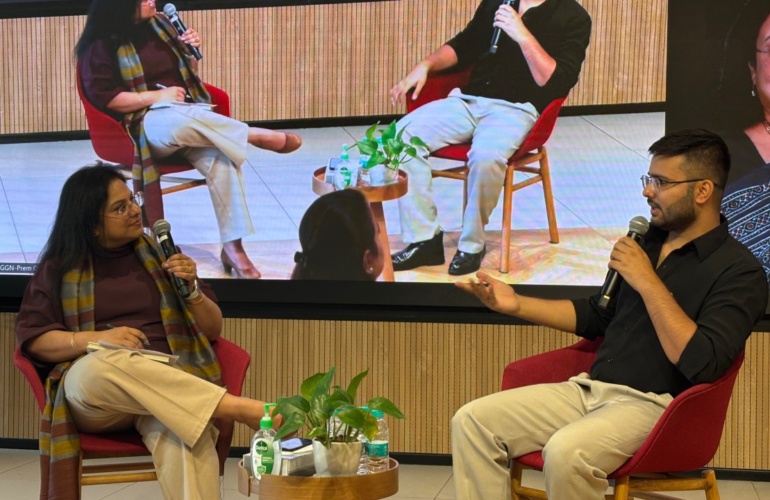
Yet as I reflected on a recent fireside chat hosted by NAB during Pride Month, alongside Yash Sharma , I found myself thinking about something deeper: belonging.

Throughout the conversation, we explored lived experiences, workplace realities, and the role organisations play in creating environments where people can show up as themselves. What stayed with me was not a particular statistic or framework. It was the reminder that inclusion is experienced in moments.

It is experienced when someone doesn’t have to edit their story before sharing it with colleagues. It is experienced when a manager responds with curiosity instead of assumptions. It is experienced when policies translate into everyday behaviours that make people feel respected, valued, and psychologically safe.

In my work with organisations across sectors, I often hear leaders speak about inclusion as a priority. The intention is genuine. The commitment is real. Yet intention alone does not create belonging.

People experience organisations through daily meetings, conversations, decisions, opportunities, and everyday interactions. They experience the culture around them. They feel whether they can speak openly. They think whether they have to conceal parts of themselves to feel accepted.

That is why Pride Month continues to matter.

It creates space for conversations that many people carry silently throughout their life. It invites organisations to listen. It encourages leaders to reflect on the experiences that exist within their teams. It reminds us that inclusion is not only about representation. It is about participation, voice, dignity, and trust.

One theme that surfaced repeatedly during our discussion was the importance of moving beyond symbolic gestures. Employees notice whether commitments are sustained. They notice whether support is visible throughout the year. They notice whether inclusion is embedded in both letter and spirit.

For organisations, this requires ongoing work. It requires leaders who are willing to listen even when the feedback feels uncomfortable. It requires systems that create access and opportunity. It requires cultures where people feel a genuine sense of belonging.

I left the conversation feeling hopeful.

Not because the work is complete. Not because every challenge has been solved.

I felt hopeful because these conversations are happening. People are sharing their stories. Leaders are engaging with difficult questions. Organisations are creating space to listen.

Pride Month gives us an opportunity to learn, evolve and celebrate as a society. It also gives us an opportunity to examine culture.

And perhaps that is the real invitation before us: not simply to acknowledge people for who they are, but to build workplaces where they can truly belong.

Listen with curiosity. Lead with empathy. Build with intention.

Link – https://www.linkedin.com/pulse/belonging-built-everyday-moments-sonica-aron-she-her-hers–y5a3c/?trackingId=lQ1cfG2xZKzV1xNkzF%2F06Q%3D%3D

Read more