Code-

Interview with People Management

Innovation is the key to success for every sustainable business and we, at Marching Sheep are constantly evolving and innovating. Through COVID and Lockdown, we learnt the art of virtual interventions and by conducting surveys and panel discussions, we understood the need of diverse industries. Through a topsy-curvy path, Marching Sheep has emerged among the Top 25 HR Consultancies in the country and Top 10 in Delhi/NCR. We have constantly contributed to the society through various knowledge sharing panel discussions. In a recent interview today with The People Management, our founder – Sonica Aron spoke about the new POSH Guidelines, Challenges of a #WomenEntrepreneur#DiversityandInclusion and our Survival Technique during COVID. Thank you team People Management for this opportunity to share our thoughts and experiences through this platform which helps shape the young HR Leaders.

Read more

Induction-TISS Interns

Team Marching Sheep is so excited to welcome our three new interns from TISS ODCL Subhashree Sekhar Abhijit Manwatkar Prem Kumar Dayyla. New projects, new learnings, new journeys, we are all looking forward to new experiences together!

5. Shruti’s Article

Normal is an illusion. What is normal for the spider is chaos for the fly.”
– Morticia Adam

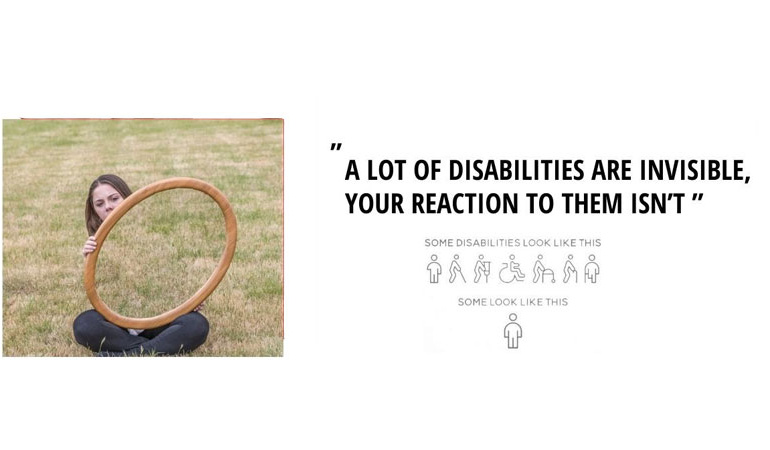
Like any modern-day individual, a person with disability would prefer to be self-reliant and be able to fulfil their roles as an individual. However, often the natural environment or the social environment may not be favourable in completely achieving such a goal.

The current pandemic has increased the complexity of the unique challenges and opportunities persons with disability face even today, where some disabilities are invisible. Therefore, we look forward to rising up to the occasion of building a better, inclusive, accessible and sustainable Post Covid world with collective efforts by, for and with persons with disabilities.

Sharing some thoughts through this article and highlighting a few areas where we still need to focus on while working towards the inclusion of persons with disability during and Post Covid times.

Looking forward to your views and insights!

https://www.linkedin.com/pulse/lot-disabilities-invisible-your-reaction-them-isnt-shruti-srivastava/?trackingId=zLovC8EdeppZNeASw6PuCQ%3D%3D

Read more

People Management Processes and Skills: A Must for all Business Owners

“Authenticity is the alignment of head, mouth, heart, and feet — thinking, saying, feeling, and doing the same thing — consistently. This builds trust, and followers love leaders they can trust.” —Lance Secretan, The Secretan Center, Inc.

As we all battle the impact of the pandemic, Entrepreneurs, and business Leaders are uniquely poised in a situation where they have an opportunity to lay the foundation for an organisation that is resilient today and tomorrow. With consistency and authenticity in Leadership, right people management skills, policy and processes that enable and empower their teams to break barriers and reach for excellence, now is the time for leaders to pause, reflect, reboot their management style and people management processes for business recovery, continuity and growth.

Here is my article on – People Management Processes and Skills: A Must for all Business Owners! Do read, like, share and leave your comment and inputs! Happy Reading!

https://www.linkedin.com/pulse/people-management-processes-skills-must-all-business-owners-krishan/?trackingId=Ru9YAHCCRFo0Ms%2FykKjb4g%3D%3D

Read more

Is Domestic Violence a Workplace Concern Today?

Domestic Violence was always a serious issue. But the pandemic has had a #catastrophic impact with a surge in cases witnessed and reported in the last few months across the world. Considering the fact that most victims do not even complain, the magnitude of the #problem is unimaginable!

With our homes becoming the new workplace today, The boundaries between workplace and home have blurred. Where leaving for office could have provided a respite, today, there is no respite.

Can employers play a role to help employees who might be victims of #domesticviolence? If yes, what role can they play? What are the #boundaries?

Sharing some thoughts on this critical topic through this article. Eager to hear your views on this #pertinent subject.

https://www.linkedin.com/pulse/domestic-violence-workplace-concern-today-rupali-kaul/?trackingId=fhafd7uFE8OLPbBgFu8JTA%3D%3D

Read more

Sonica Aron recognized amongst the top 10 Transformational business leaders of 2020 by The Enterprise World

Another accolade for Marching Sheep! Super-excited to share that Sonica Aron, our Founder and Managing Partner has been recognized amongst the top 10 Transformational business leaders of 2020 by The Enterprise World for her futuristic vision as a leader and for creating a niche place for Marching Sheep in the #evolvingmarketplace.

Thank you The Enterprise World for acknowledging our journey from being a one woman army to building and successful HR Consulting firm which is amongst the most recognized and awarded firms in India today for its high impact, contextualized and ROI driven offerings across industries and sectors. Proud, yet humbled, the journey has just begun. We want to continue to #makeadifference.

Read more

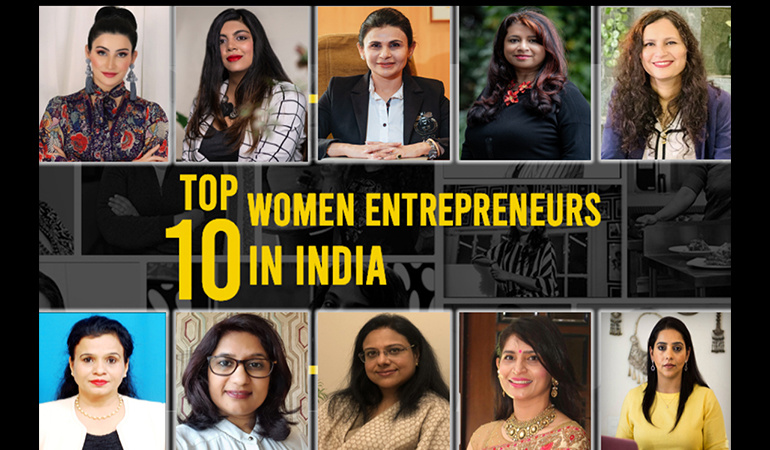
Sonica Aron recognized by Top 10 women entrepreneurs in India by Forbes India

We at MarchingSheep are extremely proud and delighted to share that our Founder, Managing Partner, Sonica Aron has been recognized amongst the #top 10 #women #entrepreneurs in India by Forbes India for her significant contribution to the business world. She has been acknowledged for her admirable efforts in taking Marching Sheep to the next level of growth and success in a short span of time. In her journey, Sonica with her grit, perseverance and passion for work, has been successful in creating a niche space for herself and team Marching Sheep in the corporate world. She has built a strong, closely knit team, which has emerged stronger and successful with each passing day in this journey, under her leadership.
Also, heartfelt gratitude to all clients and partners who have shown faith and offered continued support in her and Marching Sheep’s journey so far.

Sonica Aron your energy, laser focus and determination has inspired and motivated team Marching Sheep everyday to work towards creating a meaningful difference in the society. At this proud moment, on behalf of the whole team at Marching Sheep, to a #friend, #guide, #mentor Sonica Aron, wish you lots more success and many more accolades in times to come!

Read more

Marching Sheep recognized by Silicon India Magazine

Marching Sheep, under the leadership of our Founder and Managing Partner – Sonica Aron, has emerged as a thought provoking, leading HR firm in the country and among the Top 10 HR Consulting Firms in Delhi/NCR. Specialists in the frame of Diversity and Inclusion, we have also carved our niche in HR Consulting practice for SME & MSME sector, and building emotional resilience and psychological safety in the workforce during COVID pandemic. Recently, Silicon India published an article on Marching Sheep, calling us trendsetters offering a wide range of holistic services – D&I Strategy and Implementation, Strategic HR Consulting, Leadership & Talent Development, Emotional Health and Wellness Portfolio. At Marching Sheep, we believe that we all have a role to play and do our bit towards the community and industry, and we continue to do so and we March forward with resilience and grit!

Read more

Fears In Current Times And How To Overcome Those

These are unprecedented times and all of us have found ourselves in a situation that invokes fear- fear of personal health, fear of job loss, pay cuts, fear of long term career growth and so on. We hear about spread of COVID-19 from all over the world every day, through television, social media, newspapers, family, friends and other sources.

Covid-19 pandemic has not had just a physical impact, but a larger socio-economic impact,and  it exacts a psychological toll as well; one that requires tending to. The most common emotion faced by everyone today is “Fear”. As we approach our 73rd independence day, we at Marching Sheep are talking about “Freedom from fear”. Feeling fearful is normal, but living with fear is not.

The scale of the issue

According to the World Health Organisation (WHO), around 7.5 percent of Indians suffers from some form of mental health problem. However, the prevalence rate is said to be much more since many cases do not surface due to fear of social shame.

Further, the National Institute of Mental Health and Neurosciences (NIMHANS) — an autonomous institution under the Ministry of Health and Family Welfare — has indicated in its report that nearly 150 million individuals need active psychological intervention.

As per the National Crime Records Bureau of 2015, India’s suicide rate is as high as 10.6 per 100,000 people. While issues like dowry harassment, abuse, broken marriages, and poverty were a few reasons for such deaths, it also pointed out that a large share (one-sixth) of it was attributed to mental health ailments.

Fear and anxiety are some of common root problems behind current emotional and mental turmoil. If not attended to, the negative emotional impact is going to be far greater than the physical impact of the pandemic.

Understanding the fears

The current COVID-19 pandemic has heightened uncertainty over the economy, employment, finances, relationships, and of course, physical and mental health.

There are certain triggers to stress in this crisis like Job uncertainty, Disruption in daily routine, Salary cuts, Lack of control over the situation, Family members stranded at different location, Conflicts in family due to finances and routines.

1. Fear of getting the infection – This fear is on top of everybody’s mind nowadays. Even if you and your family are safe and home, nobody is stepping outside still this fear of getting infected with the virus is there. Many of us fear becoming ill with the virus or passing infection on to loved ones, as the risk increases when people interact. Also the fear of social distancing is leading to anxiety related to separation from loved ones.

2. Fear of Uncertainty and the unknown– There is uncertainty all around us. Nobody knows when all of this is going to end which has created an uncertain environment which is draining everybody emotionally and trapping in a downward spiral of endless “what-ifs” and worst-case scenarios about what tomorrow may bring.

3. Fear of the Job loss/Employment: We all are well aware of the statistics of the employees who have been laid off or lost their jobs due to the pandemic. Worries about job losses are the highest in the country as 86 per cent being worried about losing their jobs and livelihood post-COVID-19 lockdowns. This in turn has led fear related to survival and sustenance for many.

4. Financial Fears / Financial Anxiety: With the people losing jobs and facing severe salary cuts has led to change in their way of spending money. A nationwide survey by IndiaLends, a digital lending platform threw up no surprises: 94 per cent said they would have to be extra careful about how they spend their money in the next few months; 84 per cent said they were cutting back on spending; and 90 per cent expressed concern about their savings and financial future.

Overcoming the fears

For many people, the uncertainty surrounding coronavirus is the hardest thing to handle. But there are many things one can do even in the face of this unique crisis to manage our fears.

As individuals-

1. Stay informed but don’t get overwhelmed– It’s vital to stay informed, particularly about what’s happening in your community, to follow advised safety precautions and do our part to slow the spread of coronavirus. But there’s a lot of misinformation going around, as well as sensational coverage that only feeds into fear. It’s important to be discerning about what you read and watch. If it gets too much, switch off or do digital detox for a few days.

2. Control what can be controlled: There are a lot of things we can’t control and that causes fear and anxiety, but there are some things that can be managed or planed for. Having an action plan for managing things you might find difficult can help. Don’t miss on the safety precautions like washing hands regularly, staying home as much as possible, avoid gatherings and most importantly having a healthy balance between personal and professional priorities etc. Making prudent financial investments, saving the money one would have otherwise spent on holidays, commuting, weekend at the malls or movies, eating out.

3. Stay connected even when physically isolated: Humans are social animals. We’re hardwired for connection and need human connection. Isolation and loneliness can exacerbate anxiety and depression, and even impact our physical health. Make it a priority to stay in touch with friends and family. It’s important to take breaks from stressful thoughts about the pandemic to simply enjoy each other’s company to laugh, share stories, and focus on other things going on in our lives. Call up old friends from school and college, reconnect with ex-colleagues, reach out to all cousins, have online games and parties.

4. Occupy your mind with relaxing hobbies: Whether you play the piano, read a book, garden, paint, play a board game or meditate, all of these activities can help calm your mind and prevent you from reaching for your phone or computer and falling into a downward spiral of despair. Adopt a pet, feed a stray or whatever gives you happiness.

5. Lastly- Speak up– face your fears and articulate them. Share them with people you trust. Sharing makes the fears seem less threatening, and collective wisdom can help you overcome them remember- none of us are alone in this situation, we are together in this situation.

As an organization

1. Employee’s mental health should be your first priority in current times. Building Psychological safety in teams and emotional resilience would be instrumental in healing as a society and as an economy.

2. Foster a company culture that acknowledges employees need breaks, rest and healthy relationships to succeed in the workplace. It is ok if an employee signs off in the evening on time. It is ok if some one wants leave. Work from home is no longer a perk or a cake walk, or relaxed working from home.

3. Acknowledge WFH burnout- It’s real, It’s here. Provide a support system for employees where they can anonymously reach out and seek counselling.

4. Foster a work environment that provides all employees with support from co-workers and supervisors. Build empathetic managerial capability and communication platforms that foster trust, openness and supportive environment. All conversations cannot and should not be work related and transactional. Get to know your team members better.

5. Recognize that every employee is different and make an effort to understand employees’ preference relating to their work and work environments, way of working, way of communicating, way of maintaining personal and professional boundaries and respect choices.

6. Corporate leaders can also create clear and confidential guidelines for reporting and responding to Covid-19 cases among employees, so that employees feel safe reporting if they become sick and secure that they will have a job when they have recovered.

As a society

1. Try to help others; it will make you feel better: As a quote says “We’re standing far apart now so we can embrace each other later.”Those who focus on others in need and support their communities, especially during times of crises, tend to be happier and healthier than those who don’t. Helping others not only makes a difference to your community and even to the wider world at this time, it can also support your own mental health and well-being. There are various ways in which you can help and give back like:

a)     Reach out to others in need: If you know people in your community who are isolated—particularly the elderly or disabled—you can still offer support. Perhaps an older neighbor needs help with groceries or fulfilling a prescription? You can always leave packages on their doorstep to avoid direct contact.

b)     Donate: Donate to food banks, donate to an organization that’s making a difference during the pandemic. Some possibilities include hospitals and health centers or national and local charities that provide housing, financial assistance, or food. You can help older adults, low-income families, and others in need by donating food or cash.

c)     Be a support for someone: If friends or loved ones are panicking, try to help them gain some perspective on the situation. Instead of scaremongering or giving credence to false rumors, refer them to reputable news sources. Being a positive, uplifting influence in these anxious times can help you feel better about your own situation too.

Just remember that we all are in this together. The uncertainty and the fears are not permanent. There will be good days and bad days, so stay optimistic. Try to look at the bright side of this situation.

No matter how serious and sad all of this is, there are upsides as well. Look at the opportunities you have, you can have more time if planned well; you can reflect on your strengths and areas where you need to develop further, opportunity to reconnect with near and dear ones be it virtually, and yes not to forget the cleaner environment. And like every phase in life, this too shall pass.

Read more

We are all a little biased, even if we don’t know it!

When you type CEO, CFO or CTO in your textbox on your iPhone, notice what comes up. It is an emoji of a man in a suit. Even seemingly innocuous things as an emoji can reinforce these gendered stereotypes and biases and demonstrate the structural sexism inherent in our society. However, most of us won’t even notice these subtle stereotypes in these emojis unless we are looking for one that represents us.

Bias is an illogical preference or prejudice. It is a tendency, inclination or prejudice toward or against something or someone. Some biases are positive and helpful – like choosing to only eat foods that are considered healthy or staying away from someone who has knowingly caused harm. But biases are often based on stereotypes, rather than actual knowledge of an individual or circumstance.

Stereotypes are characteristics imposed upon people or group of people because of their race, nationality, age, sexual orientation or any other way in which we bucketize people. These stereotypes are so well known, that in the United States of America, an average American wouldn’t hesitate if asked to identify which racial group in their country has a reputation of excelling in basketball. And, different stereotypes may also be present within the larger groups, resulting in things like gender-based stereotypes within the same race. For instance, the women of a racial group may be viewed as attractive and the men in the same racial group may be viewed as the exact opposite.

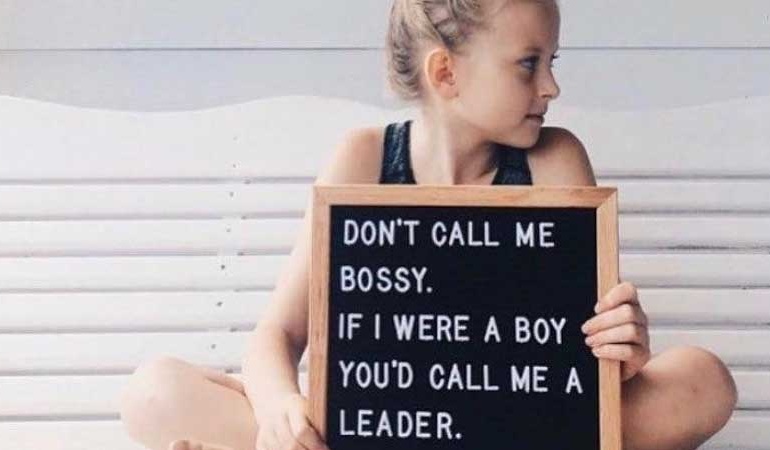
India is a diverse country with a huge population. We have a diverse cultural mix of Age, Race/Ethnicity, Sexual Orientation, Religious/ Spiritual Beliefs, Language, Regions and Gender. Every state, and every district within the state, and every village in that district shows a diverse side of India. While all this diversity adds a different colour to our country, it also brings a different type of Social Conditioning and stereotyping. For instance, North Indians are said to be loud and Jugadu people, who live life king-size. On the other hand, people from down south are considered to be simple and homely. And again, Mumbaikars are said to be street smart and career oriented. Are all people in North India or South India or Mumbai actually like this? Or are these some stereotypes which have been built over a period of time because of our experience with a few people of these regions? When a child is born, the child does not know whether he/she is a boy or girl and a Brahmin or Khatri. But as parents, we choose a pink coloured room and accessories for a girl child and blue coloured room and accessories for a boy child. And as we grow, we often get to hear that Girls have to be pretty, soft and quiet and Boys have to smart, confident and outspoken. Girls are the homemaker and should know the household chores while Boys are the breadwinners and have good knowledge about technology, politics and sports. These thoughts, over a period of time, lead to us talking to Girls mostly about shopping, if at all while Boys talk about the world. This is how social conditioning turns into stereotypes which in turn leads to a certain biased behaviour.

Biases are dependent not just upon the situation and backgrounds but also upon the upbringing and social conditioning. We are not born with these biases and instead develop them as we grow up. And over a period of time, this social conditioning turns into our beliefs leading to the development of biases. How we’ve been brought up, where we’ve been brought up, how we’ve been socialised, our socialisation experiences, our exposure to other social identities and social groups, who our friends are/were, as well as media influences, all affect how we think and feel about certain types of people. Most biases and stereotypes, do not come from a place of bad intent. It’s just a deep seated, unconscious belief that’s been formed in our brains through years of different influences we often had no control over.

Read more

Let Us Free Ourselves From Insecurities

Being insecure during current times is common and absolutely normal. But not just now, on several occasions in life don’t many of us perceive ourselves to be vulnerable in some way (could be socially, financial, professionally or personal), feel filled with self-doubt, feel short on confidence, have fear of failure, start believing that we don’t have enough to offer or are not smart enough as other people? Well, these are all forms of insecurities and it won’t be wrong to say that there isn’t a person amongst us who doesn’t have insecurities.

Is it normal to feel insecure? It is, because these are just our responses to the uncertainty of the VUCA times we are in or may be a manifestation of our beliefs we have lived with so far. But at the same time, what we need to be cognizant of is the fact that though it might be normal to feel insecure but what makes a difference is how we deal with it as it may have repercussions on our health, emotional well being and mayalso impact people around us.

What are the common insecurities we all go through?

For each one of us insecurities will be different. For some of us it may show up as social insecurity when we feel people around are always looking at us, talking about us and judging us or being excluded from a group of friends/events making it difficult to make new friends, network and socialize.

For some it could take the form of professional insecurity – fear of losing your job, denied roles and responsibilities, fear of failing to meet timelines etc. Since the lock down, many of us might be having insecurities around our work, given the state of our economy we are operating in.

Many times, professional insecurities give rise to economic insecurities. This revolves around our financial capability or even incapability. When we are financially insecure, we are afraid that we may not have a steady income or savings for our family or support a certain standard of living.

 Understanding why we feel insecure will help us deal with it better

Insecurities makes us angry, anxious and negatively impacts our mental and emotional well being. Insecurities make us panic, procrastinate, keep us away from things we ought to do and has bearings on the people we live and interact with.

If we introspect, we realize that most of our insecurities are a culmination of our beliefs and thoughts which could be influenced by factors like:

·        Certain life events

·        Past Traumas

·        Recent experiences of failure or rejection

·        Having a critical people around or being a self-critic

·        Perfectionism

·        Comparing yourself to others

Also, there are some common cognitive errors impacting our thinking pattern and might be fueling our insecurities. Lets look at some of them:

All-or-Nothing Thinking

Here, you see certain things in black or white categories. Something is either good or bad, right or wrong; there’s no room for middle ground. It makes us think of the extreme and can lead to low esteem and feeling of not being good enough. Eg: I answered one question wrong, so I’m a failure or I didn’t get a promotion so I might as well quit my job.

Overgeneralization

Overgeneralisation involves reaching a conclusion about an event and applying that conclusion across the board. It can cause you to feel hopeless and might stop you from trying to learn and grow. Eg: You may have cooked a dish badly and you conclude you are a terrible cook.

Mental Filtering

Another thought pattern which can lead to insecurities is the tendency to ignore positives and exclusively focus on negatives. Eg : If you receive feedback at work which says you’re a great team player, you have creative ideas and you could work on being more punctual, you might focus solely on the fact that you should be more punctual and ignore all the other positive feedback.

Personalization

This is about taking things personally when they’re not connected to or caused by you at all. Eg: When you blame yourself for circumstances that aren’t your fault or are beyond your control.

Let us all take an inward view

There are many causes of insecurities in our lives, but what matters more is how we deal with them. We can take steps to deal with our insecurities, to push past our insecurities and dare to follow your dreams.

To deal with insecurities, we need to change our perspective, from an outward view which is based on fear where we feel everything is out to get us to an inward view which is full of possibilities, choices and purpose to emerge stronger and positive. There isn’t much we can do to fix the world we live in but changing our minds and seeing things positively is freedom from our insecurities and fears in true sense. In the moment(s) of insecurity, focusing on possibilities, forcing our mind to shift from problem to solution, brings hope and positivity. Taking action leads to positive consequences that can potentially help us reduce insecurities and boost confidence. And doing this regularly, can create a habit of fighting insecurities mindfully.

As we celebrated our Independence Day this month, I have pledged to free myself from my insecurities. And when I say “free” I mean, to deal with them positively, find my moments of joy, leverage my strengths and stay optimistic, always !

Read more

Marching Sheep recognized as one of the 25 fastest growing companies in India 2020 by Business Connect Magazine.

This is a proud moment for Team Marching Sheep. We are delighted to share that Marching Sheep has been recognized as one of the 25 fastest growing companies in India 2020 by Business Connect Magazine . We have been recognized for the admirable progress that we have made in a short span of time through our wide range of customized and high impact offerings to address the evolving needs of businesses across the nation.
In the last 7 years since our inception in 2013, from being a completely bootstrapped company, we have grown into an established HR Advisory with a rich clientele encompassing major industry players across sectors. Our solution oriented approach, a strong, well-knit team, its 
#commitment and #perseverance in the last few months has helped us emerge stronger and successful. Heartfelt gratitude to all our clients and partners for having faith in us.

Read more